
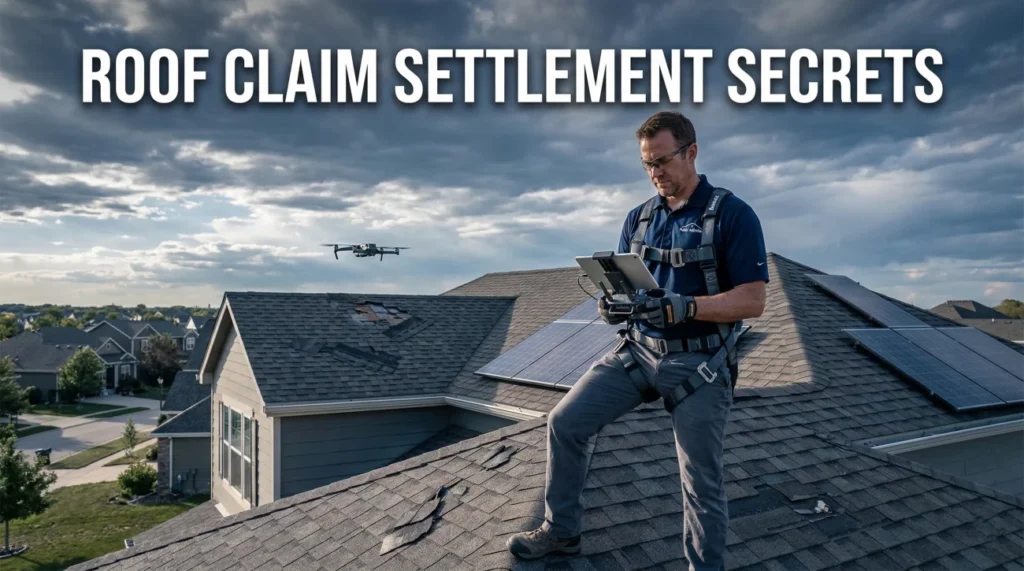
- If your roofer’s estimate is significantly higher than your insurance payout, the difference is rarely just contractor markup. It is almost always missing scope.
- Roofers can legally write repair estimates, but in most states, they cannot legally negotiate your claim with the insurance company. That requires a public adjuster license.
- Insurers commonly underpay roof claims by ignoring matching issues, omitting soft metals (gutters, flashing), and paying Actual Cash Value (ACV) while making it difficult to recover depreciation.
- You do not have to learn how to read complex adjuster software to fight back. A licensed public adjuster can review your scope for free and negotiate the difference on contingency.
Your Roofer Says the Insurance Estimate is Too Low. Now What?
I have sat across from insurance company adjusters on hundreds of roof claims, and the scenario almost always starts the same way. A severe storm rolls through, you notice missing shingles or hail strikes, and you file a claim. The insurer sends their adjuster, an estimate arrives in the mail a few weeks later, and a check is deposited into your account.
You feel relieved, until you hand that estimate to a local roofing contractor. They take one look at the paperwork, shake their head, and tell you that the insurance check won’t even cover the cost of the materials, let alone the labor to install a new roof.
You are suddenly caught in the middle. The insurance company says the roof can be repaired for a specific dollar amount. The roofer says it is impossible. As a homeowner, you are left wondering who is telling the truth and how you are supposed to pay for the gap. I see this exact situation every single week.
In my experience reviewing hundreds of property files, when a reputable roofer’s estimate is more than 20% higher than the insurance payout, it is rarely because the contractor is overcharging. It is almost always because the insurer’s adjuster left necessary items off the scope of loss.
Warning: If you are feeling pressured to sign an Assignment of Benefits (AOB) with a contractor or cash an initial settlement check just to get repairs started, pause. Taking those steps before a professional reviews your estimate can lock you into a lowball payout and make it much harder to recover the funds you actually need.
The instinct for most homeowners is to ask the roofer to call the insurance company and sort it out. But depending on where you live, doing so might actually jeopardize your claim. Understanding who is allowed to advocate for you is the first step in getting your roof properly funded.
The Three-Party Problem Every Roof Claim Creates
When your roof is damaged, you are thrust into a complex dynamic involving three different parties, each with entirely different financial motivations. If you do not understand this dynamic, you will likely end up paying out of pocket for damage you are insured against.
| Party | Primary Motivation | Role in Your Claim |
|---|---|---|
| The Insurance Company | Mitigate financial exposure | Sends their adjuster (who they pay) to write an estimate and close the claim quickly. |
| The Roofing Contractor | Win your construction business | Provides technical repair estimates but cannot legally interpret policy or negotiate scope on your behalf. |
| The Public Adjuster | Maximize your legitimate payout | Hired exclusively by you to build an independent scope, challenge the insurer, and negotiate the settlement. |
The friction happens when the insurer’s estimate and the roofer’s reality collide. Homeowners often feel paralyzed, unsure of how to bridge the gap without spending thousands of their own dollars.
What Roofers Can (and Cannot) Do for Your Claim
This is where claims get messy. Many well-meaning roofers will tell you, “Don’t worry, just sign this form, and I’ll handle the insurance company for you.” It sounds like a massive relief. Unfortunately, it is often a trap.
A licensed roofer is an absolute necessity for writing a proper repair estimate and executing the physical work. However, in most states, it is unauthorized practice of public adjusting (and strictly illegal) for a contractor to negotiate an insurance claim, attend a reinspection to argue coverage, or dispute your insurer’s scope on your behalf.
Signing an Assignment of Benefits (AOB) handing complete control of your claim over to a roofing contractor, hoping they can force the insurer to pay more.
Having a roofer provide a technical repair estimate, but hiring a licensed public adjuster to handle the actual negotiation, policy interpretation, and scope disputes with the insurance carrier.
If your roofer attempts to argue policy language with your insurance adjuster, the insurer will often shut down communication immediately, citing state law. When you need to challenge the insurance company’s numbers, you need someone who speaks their exact language, uses their exact software, and holds the legal authority to represent you.
What Your Insurer’s Roof Estimate is Probably Leaving Out
Insurance adjusters use highly specific software (usually Xactimate) to write estimates. As a homeowner, looking at this line-item report feels like reading a foreign language. That confusion is by design. If you cannot read the document, you cannot know what is missing.
When analyzing these disputed estimates, I consistently see the same four categories intentionally minimized or omitted from initial roof damage offers.
1. The Shingle Matching Problem
Often, an adjuster will acknowledge that wind or hail damaged a section of your roof, but they will only write an estimate to replace the specific damaged slopes. The problem? Your roof is 12 years old, and that specific shingle line was discontinued by the manufacturer three years ago. Even if they find a similar color, a partial replacement will leave your home looking like a patchwork quilt, destroying its curb appeal and value.
Many policies include “matching” coverage, but insurers rarely volunteer it. They rely on the homeowner accepting the partial repair check without fighting for a uniform appearance.
2. Soft Metals and Roof Accessories
Hail does not selectively target shingles while ignoring the rest of your home. Yet, I routinely review estimates that pay for roof repairs but completely ignore the massive dents in the soft metals.
Estimates that omit necessary line items for gutters, downspouts, chimney flashing, drip edges, and skylight frames are incredibly common. If these soft metals are heavily bruised by hail but missing from the paperwork, the claim has been fundamentally undervalued.
3. Interior Collateral Damage
If your roof was compromised by a severe storm, water likely found its way inside. A standard adjuster inspection for roof damage frequently takes less than an hour, and they rarely spend adequate time in the attic or scanning the second-floor ceilings with moisture meters.
If your roof estimate does not include remediation for wet insulation, drywall repair, and interior painting, you are absorbing the cost of secondary water damage yourself.
4. Local Building Code Upgrades
Building codes change. If your roof was installed 15 years ago, the materials and methods used back then may not meet today’s municipal requirements (such as specific ice and water shields or upgraded decking). If you have Ordinance or Law coverage in your policy, the insurer is required to pay for these upgrades. However, they almost never include these costs in the initial estimate unless forced to by a professional.
The ACV vs. RCV Trap: Why Your Check Looks So Small
This is the single most common point of confusion I encounter, and it is where thousands of dollars are left behind. If you look at your insurance paperwork, you will likely see two different totals: Replacement Cost Value (RCV) and Actual Cash Value (ACV).
If you have a replacement cost policy, your insurer owes you enough to buy a brand new roof at today’s prices (the RCV). However, they will not give you that money upfront. They first subtract your deductible, and then they subtract “depreciation” based on the age of your roof.
The check you received in the mail is only the ACV. To get the rest of the money (the recoverable depreciation), you have to prove that the repairs were completed and submit complex final invoices. Many homeowners look at the initial ACV check, assume that is all they are getting, realize it is not enough to hire a roofer, and simply abandon the claim. This is exactly what the insurer hopes will happen.
Key Point: Do not assume your claim is settled just because a check arrived. If your estimate shows recoverable depreciation, there is a second payment waiting for you, but you must know exactly how to trigger its release.
How to Know When to Bring in Professional Help
You do not need to become an expert in insurance policies or estimating software to know if you are being treated unfairly. You just need to look for the patterns.
If your roofer’s estimate is significantly higher than your insurer’s estimate (a gap of 20% or more), that gap is not contractor greed. It is missing scope. If your adjuster was on your property for less than 45 minutes after a major hailstorm, your scope is likely incomplete. If your insurer is demanding that you patch a 15-year-old roof instead of replacing it, you have a valuation dispute.
Timing is also critical. Most policies require you to act within a specific timeframe (often one to two years from the date of loss) to claim your full benefits. Waiting too long while arguing back and forth with the adjuster, or trying to save up your own money to pay the gap, can actually cause your claim rights to expire.
The core problem is that you cannot close this gap simply by complaining to the adjuster. You have to prove, line by line, why their Xactimate estimate is flawed. You have to write a competing, highly technical scope of loss. For 99% of homeowners, this is impossible to do accurately. This is exactly why relying on a contractor’s estimate or trying to argue the numbers yourself rarely works. You need a licensed advocate who can fight the insurer on their own terms.
Closing the Gap: What Happens When You Bring in a PA
The moment you hire a licensed public adjuster, the power dynamic immediately shifts. They step in to perform an independent, rigorous inspection of your roof, build their own technical scope of loss, and take over all communication with the insurance company on your behalf. You no longer have to worry about whether a line item was missed or if an email was phrased correctly.
The best part? Public adjusters work on a contingency fee basis. This means they take a predetermined percentage of the new money they recover for you. If they review your claim and determine the insurance company gave you a fair deal, they will tell you so, and you pay nothing. The financial risk is entirely on them.
The only way to know exactly what is missing in your specific claim is to have an expert read your actual scope of loss. That is exactly what a free public adjuster review is for, and it is the smartest move you can make before you sign a contractor agreement or cash a final settlement check.
❓ Frequently Asked Questions About Roof Damage Claims
🌪️ Should I hire a public adjuster for storm damage to my roof?
If the storm caused extensive damage, multiple leaks, or if the insurer’s initial payout is vastly lower than your contractor’s repair quote, hiring a public adjuster is highly recommended. They ensure all secondary damage is documented and properly valued.
🔨 Can my roofer negotiate my insurance claim for me?
In most states, no. It is illegal for a roofing contractor to act as a public adjuster, negotiate policy terms, or argue scope directly with the insurance carrier unless they hold a separate public adjuster license.
📉 At what point should I realize my roof claim is underpaid?
The clearest red flags are when your adjuster spends less than 45 minutes inspecting a severe storm loss, when soft metals (like gutters) are completely ignored on the estimate, or when a reputable contractor’s quote is more than 20% higher than your payout.
⏳ How long do I have to dispute my roof damage settlement?
This depends strictly on your policy and state law, but most standard policies allow you one to two years from the “date of loss” to file a supplemental claim or dispute the settlement amount. Do not wait until the deadline is close.
💰 What percentage does a public adjuster take for a roof claim?
Public adjusters typically charge a contingency fee ranging from 10% to 20% of the settlement amount they recover for you. Because they only get paid if you get paid, there are no upfront out-of-pocket costs.
🚫 My roof claim was denied, can a public adjuster still help?
Yes. If your claim was denied based on a dispute over the cause of damage (e.g., the insurer claims it is “wear and tear” instead of storm damage), a public adjuster can perform a reinspection to challenge that determination.
📑 Do I need a public adjuster if I just have a few missing shingles?
If the damage is minor, clearly below your deductible, and your roofer’s repair cost is very low, a public adjuster is likely not necessary. They are most valuable for large, complex, or heavily disputed claims.
🤝 Should I sign an Assignment of Benefits (AOB) with my roofer?
You should be extremely cautious. Signing an AOB transfers your rights in the insurance claim entirely to the contractor. It is often safer to keep control of your claim and hire a public adjuster to handle the funds negotiation.
🏡 How do I get a full roof replacement from insurance?
Securing a full replacement is one of the most heavily disputed areas in claims. It requires proving that repairs are impossible due to discontinued materials, widespread structural impact, or building code changes. These are arguments that typically require a licensed public adjuster to build, document, and negotiate successfully.
⚖️ What is the difference between a public adjuster and an independent adjuster?
An independent adjuster is hired and paid by the insurance company to assess claims on their behalf. A public adjuster is hired and paid exclusively by the homeowner to advocate for the maximum settlement.
Roof claims are the most common and the most frequently underpaid. These explain why.
- How a claim moves from filing to final payment
- What your policy actually covers and what it does not
- How storm and hail damage is classified during the inspection
- When filing a claim makes sense and when it works against you
- What to do after a denial and what your actual options are
- What a public adjuster does and when you actually need one
- When legal help is the move that changes the outcome
The roofer-vs-insurer problem is common across damage types. See which others follow the same pattern.
- The 5 patterns that signal a roof settlement is likely short
- Who the adjuster at your door actually works for
- Where water damage estimates most often fall short
- What fire damage settlements commonly leave out
- Why your roofer's number and the insurer's estimate do not match
- When a denial needs legal leverage, not just negotiation
- Four paths to fight a denial, including one most homeowners miss
Disclosure: I'm sharing my personal industry experience, but I am not an attorney or a licensed insurance agent. The guides on this site are for informational purposes to help you understand the operational side of property claims: process, organization, and documentation. Every policy is unique, so please defer to your specific policy language. For legal interpretation, contested situations, or binding advice, always consult a licensed professional in your jurisdiction.