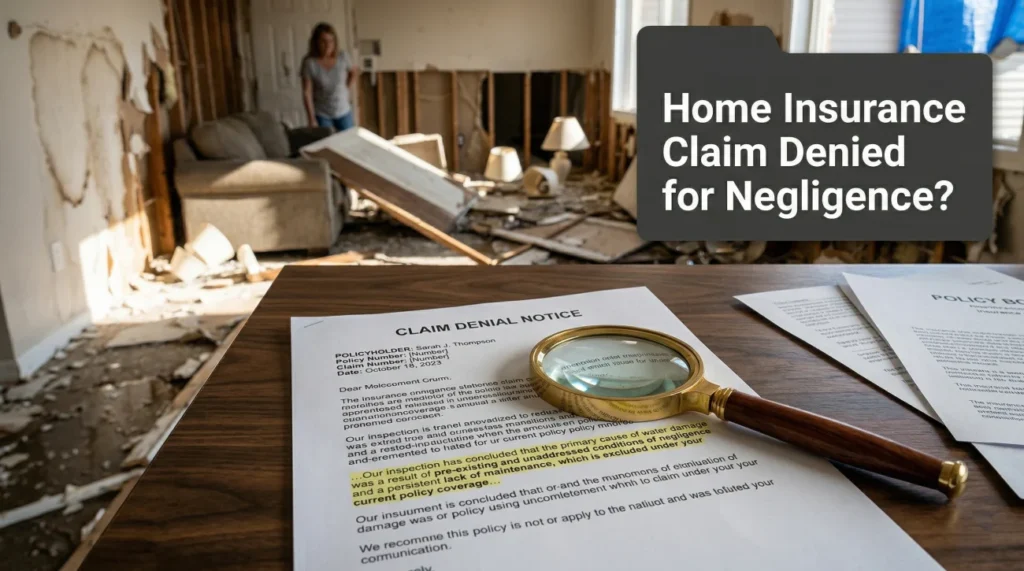
- The accusation of knowledge: A negligence or “failure to maintain” denial means the insurance company believes you specifically knew about a problem and chose not to fix it before it caused a larger loss.
- Active vs. passive failure: This is completely different from normal wear and tear. Negligence implies an active failure on your part, requiring the adjuster to find evidence that you ignored clear warning signs.
- Evidence is required: Adjusters cannot simply guess that you should have known. You can fight this denial by countering their assumption with your own maintenance records or clean inspection reports.
The Hidden Accusation in a Negligence Denial
Reading a letter that says your home insurance claim was denied is frustrating enough. But when the letter cites “homeowner negligence” or “failure to maintain,” it hits differently. It feels personal. The insurance company is not just saying your policy does not cover the event. They are essentially saying the damage is your fault because you had the opportunity to prevent it and you chose not to.
In my experience reviewing hundreds of property damage files, I see this specific denial used frequently, and often incorrectly. Adjusters sometimes use the negligence exclusion as a catch-all when a home is older or when a leak has been running for a while. But there is a massive difference between an invisible pipe quietly leaking behind drywall and a homeowner staring at a visibly rotting roof for three years without calling a roofer.
If you have received a negligence denial, you need to understand exactly what the insurer is accusing you of. Below, I will break down how insurance companies define deferred maintenance, what specific evidence they use to prove you knew about the problem, and how you can document your side of the story if the adjuster’s assumption is wrong.
What the Negligence and Maintenance Exclusion Actually Says
To fight a denial, you first have to understand the rule the adjuster is applying. Almost every standard HO3 homeowners policy includes language stating that the homeowner must use “reasonable care” to maintain the property and protect it from further damage.
When an adjuster issues a home insurance claim denied negligence letter, they are invoking the “deferred maintenance” exclusion. This means they concluded that the root cause of your property damage was your failure to perform basic, expected upkeep.
However, the concept of reasonable care is subjective. It generally means performing tasks an average, responsible homeowner would do: cleaning gutters, replacing obviously missing roof shingles, or fixing a dripping sink before it floods the cabinet. It does not mean you are expected to be a licensed plumber or structural engineer who can predict when a hidden appliance hose is going to burst.
Field Note: One of the most common overreaches I see is an adjuster blaming a homeowner for failing to maintain a component that was completely inaccessible. I once reviewed a file where a carrier tried to deny a massive water claim due to ‘negligence’ because a pipe failed inside a sealed concrete slab. A homeowner cannot maintain what they cannot see.
Negligence vs. Wear and Tear: The Critical Difference
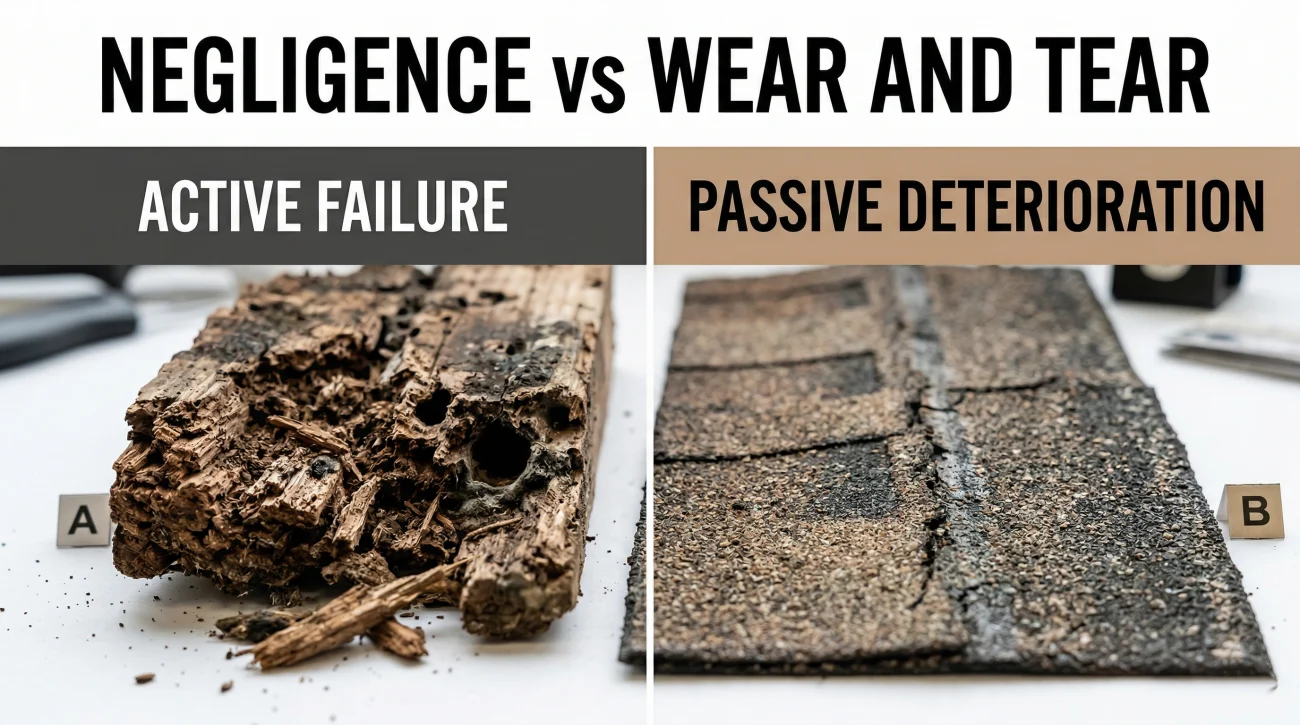
Many homeowners confuse a negligence denial with a wear and tear denial, but in the claims world, these are two entirely different concepts that require completely different counter-evidence.
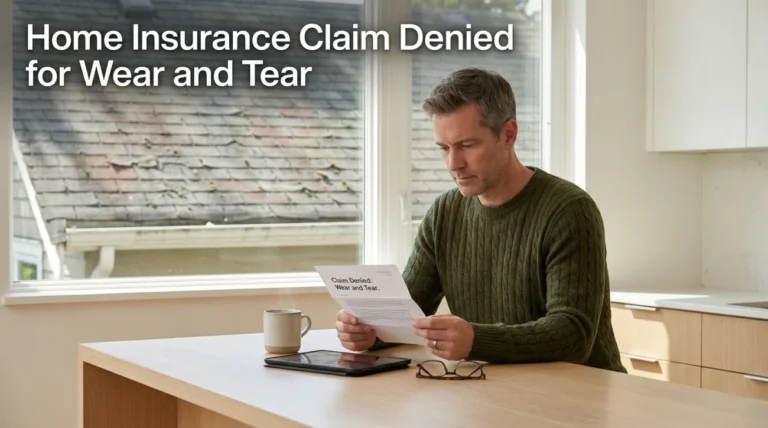
A wear and tear denial is about passive deterioration. The insurer is saying the materials simply reached the end of their natural lifespan. For example, your 25-year-old asphalt shingles degraded over time. There is no accusation that you did something wrong, only that the policy does not pay for old age.
A negligence denial is about an active failure. The insurer is arguing that you had specific knowledge of a defect and you failed to act. For example, you knew you had a severe roof leak in the guest bedroom for two years, you placed a bucket under it, and you never called a roofer until the ceiling finally collapsed.
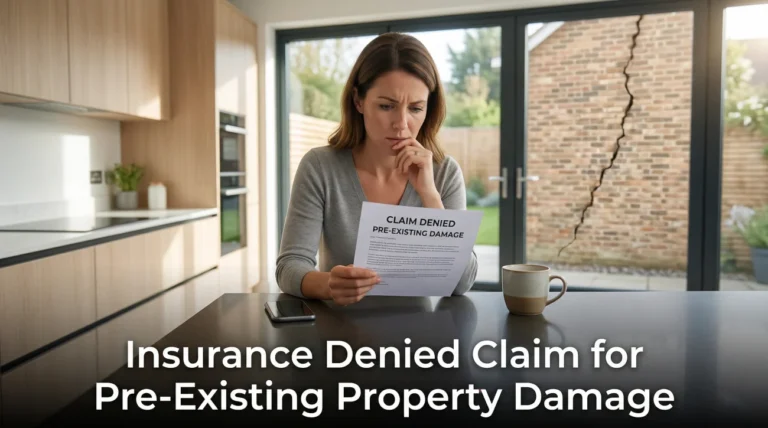
It is also distinct from a pre-existing damage denial, which focuses purely on the timeline of when the damage occurred, regardless of whether you knew about it or tried to maintain it. Understanding these boundaries helps you pinpoint exactly what the adjuster is trying to prove.
The Evidence Insurers Use to Establish Failure to Maintain
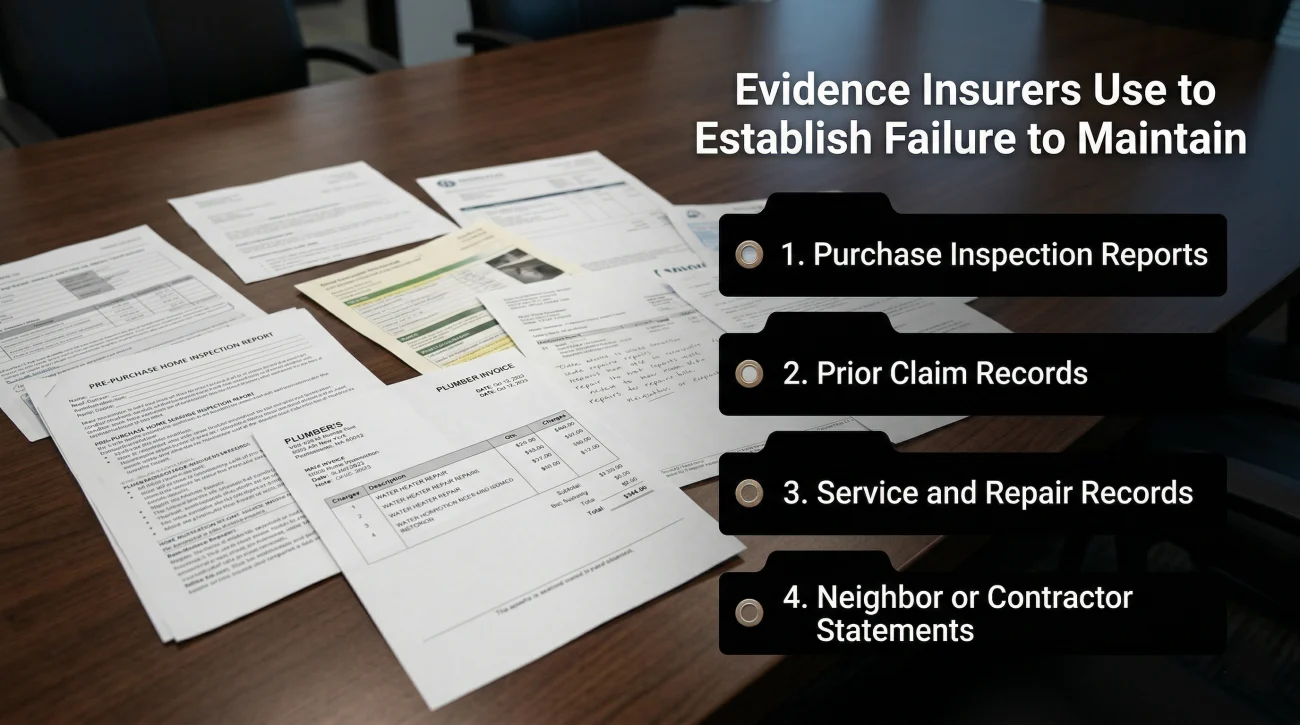
An adjuster cannot just walk into your home, look at a water stain, and declare you negligent based on a gut feeling. To properly support a denied insurance claim for deferred maintenance, they are supposed to gather documented evidence showing you had prior knowledge of the issue. When I review files, these are the primary places I see adjusters look for proof of prior knowledge:
- Home purchase inspection reports: If you bought the house a year ago, the insurer might request your closing inspection report. If that report clearly stated “plumbing under kitchen sink is actively leaking and requires immediate repair,” and you never fixed it, they will use that as proof of negligence.
- Prior claim records: If you filed a claim for a small roof leak three years ago, took the payout, but never actually hired a contractor to fix the roof, the insurer will flag this immediately if a new storm blows that exact section of the roof off.
- Service and repair records: Adjusters look at the general state of your home’s systems. If your HVAC system caused a fire and you have zero records of it being serviced in fifteen years, they may lean toward a lack of maintenance argument.
- Neighbor or contractor statements: It sounds harsh, but casual conversations can hurt your claim. If a plumber tells the adjuster “Yeah, I told the homeowner this pipe was going to burst six months ago,” that statement will go directly into the claim file.
Arguing with the adjuster over the phone, saying “I didn’t know it was leaking” without providing any documentation.
Requesting the adjuster provide the exact inspection photos or documents they are relying on to prove you had prior knowledge of the defect.
Common Scenarios That Trigger a Negligence Denial
Certain types of property damage attract the negligence label more than others. From what I have seen reviewing claims, here are the areas where adjusters are specifically trained to look for homeowner fault:
Long-Term Seepage and Slow Leaks
This is the most frequent battleground. If a pipe bursts suddenly, it is usually covered. But if a pipe under your sink has been dripping for six months, causing the cabinet base to rot entirely and mold to grow up the drywall, the adjuster will likely deny the claim. Their argument is that a homeowner using reasonable care would have noticed a rotting cabinet long before the damage became severe. If your leak was genuinely hidden, your tactical response must focus on visibility. You will need your plumber to explicitly document in their report that the failure occurred behind sealed materials and would not have shown outward signs until the moment you discovered it.
Ignoring Known Roof Damage
If a tree branch punches a hole in your roof and you leave it open to the rain for three weeks without placing a tarp over it, the resulting interior water damage will likely be denied due to your failure to mitigate and maintain the property post-loss. This is technically a “failure to mitigate” (not preventing further damage after an event occurs), but adjusters frequently lump it under negligence. To fight this, you must provide a timeline proving exactly when the initial damage occurred and document the temporary measures you took, even just laying down buckets or moving furniture, while waiting for professionals.
Visible Structural Rot
If the exterior wooden siding of your home has been peeling, rotting, and soft to the touch for several years, and water finally intrudes to ruin your interior drywall, the insurer will argue that the exterior envelope of the house was visibly compromised and ignored. To overcome this, your defense relies on proving that the water intrusion came from a sudden, covered event, like wind-driven rain breaching a tight seal, rather than simply soaking through decayed wood over time. A contractor’s detailed moisture map is critical evidence here.
Signs Your Negligence Denial Might Be an Overreach
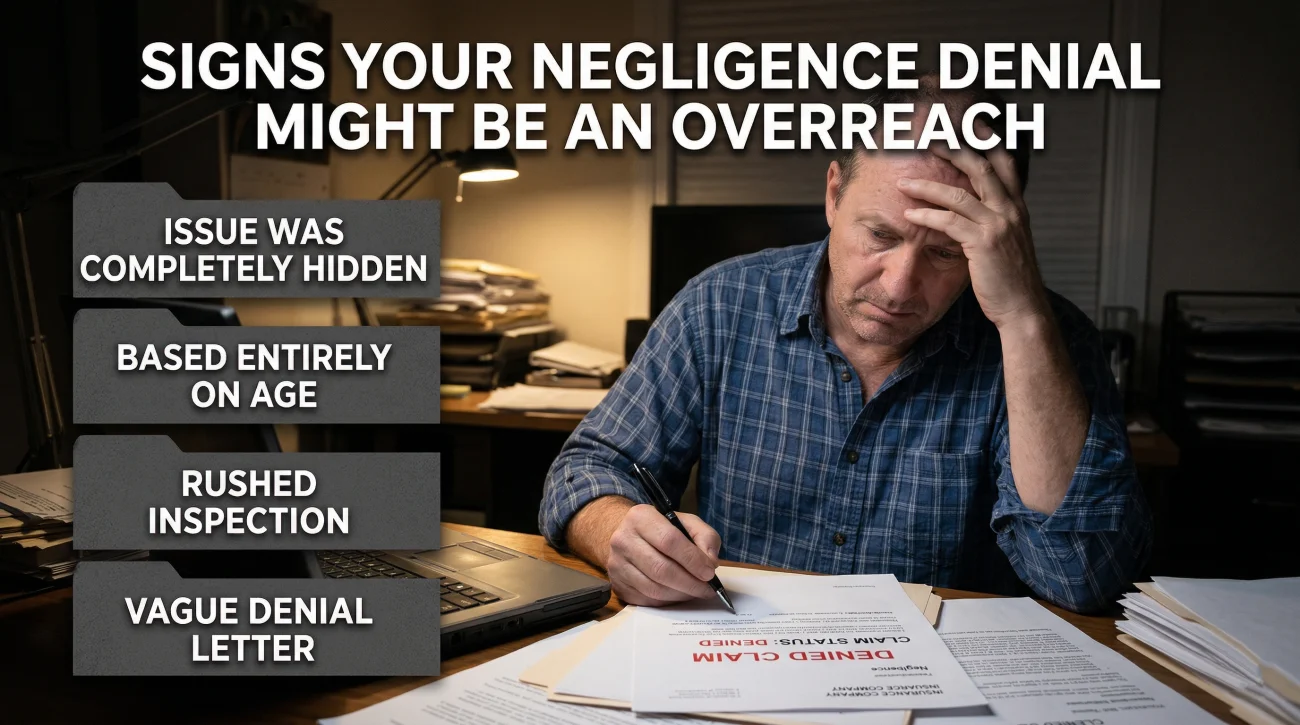
Not every negligence denial is justified. Insurance companies sometimes confuse damage that happened slowly with damage the homeowner actually knew about. Here are the operational red flags that suggest your adjuster may have jumped to conclusions:
- The insurer claims you “should have known” about the damage, but the source of the issue was completely hidden behind drywall, under flooring, or in a sealed attic space.
- The denial is based entirely on the chronological age of your home or your appliances, rather than specific evidence of neglect. An old pipe is not automatically a neglected pipe.
- The adjuster spent less than twenty minutes at your property, took a few photos of a water stain, and issued a negligence denial without asking for your maintenance records or interviewing you.
- The denial letter cites a general “duty to maintain” clause but fails to point out what specific action you failed to take.
If you see these signs, you are not facing a lost cause. You are facing an adjuster who made an assumption without doing the investigative homework. It is crucial to remember that a denied claim is not always the end of the road, provided you know how to challenge their specific reasoning. Moving from a denied status to a paid settlement requires shifting the conversation away from the adjuster’s assumptions and back to documented facts.
Documentation That Can Challenge the Adjuster’s Assumption
To beat an incorrect failure to maintain denial, you have to prove that you acted responsibly. You do this by burying their assumption in paperwork.
What Maintenance Records Actually Matter?
You do not need to keep a receipt for every lightbulb you change. However, if you want to bulletproof your claim file against future negligence denials, focus on keeping records of major system checkups. Annual HVAC service invoices, roof inspection reports after severe weather, and any receipts for plumbing repairs should be kept in a dedicated home maintenance file. Even a clean home inspection report from when you refinanced the house can serve as powerful evidence that the home was in good condition at a specific point in time.
If the adjuster claims your roof was neglected, provide the invoice from the roofer who did minor repairs or an inspection just two years ago. If they claim a plumbing leak was ignored, provide your routine maintenance receipts from your local plumber.
💡 Pro Tip: Never let the adjuster’s assumption stand unchallenged in the claim file. Force them to put their evidence in writing.
Here is a practical script you can use to push back on an unfounded negligence accusation:
Subject: Request for Clarification on Claim Denial # [Your Claim Number]
Hello [Adjuster Name],
I received the denial letter citing a failure to maintain the property. Because this defect was hidden [e.g., inside the wall cavity / beneath the subfloor], I had no visible warning signs to act upon.
Please provide the specific inspection notes, photographs, or policy language you are relying on that establishes I had prior knowledge of this defect and actively neglected it. I am gathering my own maintenance records and will present them for review once I understand the exact basis of your decision.
Thank you,
[Your Name]
When to Bring in an Independent Set of Eyes
If the adjuster’s negligence determination was based on a rushed inspection, or if they are incorrectly attributing sudden storm damage to long-term neglect, fighting it alone with emails can be exhausting. In these cases, having an independent professional document the actual cause of loss is incredibly effective. Consider having a licensed public adjuster review the physical damage to provide an objective, counter-report to the insurance company.
Final Thoughts on Negligence Denials
A home insurance claim denied for negligence is essentially a dispute over your behavior as a homeowner. Insurers rely heavily on the idea that property owners must protect their investments. However, you are only required to exercise reasonable care based on what a normal person can see and address.
A negligence denial is ultimately a debate about your responsibilities as a property owner. While the insurance company expects you to maintain your home, they cannot hold you to an impossible standard of predicting failures before they happen. If you know you have acted reasonably, do not let an adjuster’s unverified assumption close your file. Organize your timeline, gather your maintenance history, and prepare to escalate the dispute.
If your documentation is strong but the insurer refuses to budge, you need to understand the formal paths available to escalate the dispute. For a complete breakdown of your options after a denial, including when to file a formal appeal or seek legal counsel, read our comprehensive guide on how to fight a denied home insurance claim.
❓ FAQ
🕵️♂️ What counts as homeowner negligence in an insurance claim?
Negligence generally means you knew about a specific defect or hazard (like a severe roof leak or a dripping pipe) and failed to take reasonable steps to repair it, resulting in worse damage over time.
🏚️ Can they deny my claim for deferred maintenance?
Yes. Every standard policy requires you to maintain the property. If the adjuster finds that your damage was caused entirely because you deferred basic, expected maintenance for years, they can deny the claim.
📑 How do insurers prove I knew about the damage beforehand?
They look for written evidence. This usually includes past home inspection reports, records of prior claims for the same issue, or even notes from contractors who previously told you a repair was necessary.
💧 Is a slow plumbing leak always considered negligence?
Not always. If the slow leak was entirely hidden behind walls or under cabinets with no visible signs of water damage in the living space, you can strongly argue that you had no way of knowing it existed.
📸 How do I dispute a negligence denial on my home insurance?
You dispute it with paperwork. Provide recent home inspection reports, routine service invoices from plumbers or HVAC technicians, or any documentation proving you regularly maintained that specific part of your home.
🛠️ What if I bought the house recently and didn’t know about the issue?
If you just bought the house, the insurer will immediately request your pre-purchase home inspection report. If the inspector missed the issue too, that report becomes your best evidence that the defect was truly hidden.
🌧️ Can a storm damage claim be denied for lack of maintenance?
Yes, if the insurer believes the storm only caused damage because the structure was already severely compromised by neglect. However, this is a highly disputed area where independent contractor estimates are crucial.
🧾 How far back should I keep maintenance records, and in what format?
Keep records for major systems (roof, HVAC, plumbing) for the entire lifespan of that specific component. Digital copies are highly recommended over paper; a cloud folder ensures your proof of maintenance is not destroyed in the very water or fire event you are claiming.
🧑🔧 What happens if my contractor caused the negligence?
If a contractor performed faulty work that later caused damage, your insurer might deny your claim based on “faulty workmanship,” which is a separate exclusion. In that case, you typically have to pursue the contractor’s liability insurance.
⚖️ Is “homeowner at fault” the same as a negligence denial?
In property insurance terms, yes. When an adjuster says the homeowner is at fault for property damage, they usually mean the homeowner breached their duty of reasonable care by failing to act.
A denial sits inside a larger picture. These explain the parts around it.
- How the settlement process works after damage is reported
- Which parts of your policy apply when damage is involved
- How your damage type affects what the insurer is required to pay
- Whether the damage you have is actually worth filing for
- What happens when the claim you filed gets rejected
- How independent representation changes what gets documented
- When a disputed claim moves into legal territory
Not all denials are final. The path forward depends on why it happened.
- Whether your damage assessment left money on the table
- What the inspector who came to your home was actually there to do
- The parts of water damage that standard inspections routinely miss
- What fire and smoke assessments leave out of the scope
- Why the insurer's roof estimate is almost always lower than the roofer's
- When the denial crosses from a dispute into something that needs legal leverage
- Four options to fight back, including one most homeowners never use
Disclosure: I'm sharing my personal industry experience, but I am not an attorney or a licensed insurance agent. The guides on this site are for informational purposes to help you understand the operational side of property claims: process, organization, and documentation. Every policy is unique, so please defer to your specific policy language. For legal interpretation, contested situations, or binding advice, always consult a licensed professional in your jurisdiction.