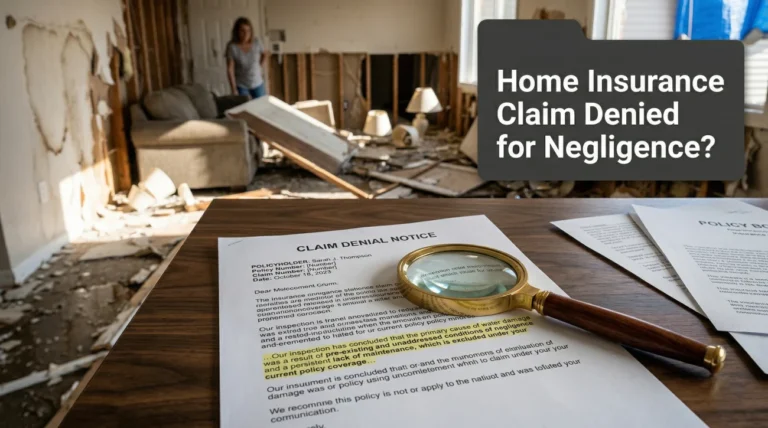

- A formal appeal is an internal review request asking your insurance company to take a second look at new evidence, not a legal lawsuit.
- Filing a successful appeal requires submitting new, concrete documentation rather than simply arguing with the initial decision.
- Your appeal letter must clearly identify the denial reason, cite the relevant policy language, and present counter-evidence to support your position.
- If your appeal is denied a second time, it usually means the internal review process is exhausted and you must evaluate other escalation paths.
The Reality of Formal Appeals: Why Most Homeowners Miss the Mark
Receiving a denial letter from your insurance company is incredibly frustrating. For most homeowners, the immediate reaction is to call the customer service line and argue with the representative. When that fails, the formal appeal is usually step one. However, most homeowners approach the formal appeal process the wrong way by skipping the most critical component: new documentation.
I have reviewed countless claim files and appeal requests over the years. In my experience, the biggest mistake people make is treating an appeal like a customer complaint. They write a passionate email explaining how long they have been a loyal customer or why the damage is unfair. Unfortunately, desk adjusters and review managers cannot overturn a denial based on emotion or loyalty. They can only overturn a decision based on hard, documented evidence that contradicts their original findings.
If you want your appeal to be taken seriously, you have to treat it as an evidence-gathering mission. This guide will walk you through exactly what a formal appeal is, what to include in your submission, and how the mechanics of the timeline actually work.
What a Formal Appeal Actually Is
It is very important to understand the structural difference between an appeal and a legal action. A formal appeal is simply an internal review request. You are asking a different, often higher-ranking adjuster within the same insurance company to review the original adjuster’s decision alongside new information.
Because this is an internal process, it is not a legal filing. It does not involve a judge, and it does not guarantee a neutral third-party review. The distinction matters heavily for your expectations. You are essentially asking the company to correct its own mistake. This is why overwhelming them with clear, undeniable proof is the only way to force a change in their position.
Before you even begin drafting your appeal, you need to understand the basic landscape of why claims are rejected. For a high-level look at the basic types of claim denials, reviewing the main categories of legitimate versus challengeable decisions will help ground your expectations.
When an Appeal is the Right First Move
An internal appeal is not a magic wand for every situation. It works best under very specific conditions. Generally, an appeal is highly effective when the original denial was based on a documentation gap, an obvious adjuster error, or a missing piece of context that you can easily supply.
For example, if the insurer denied your roof claim because they said the damage was older than your policy, but you have a clear, date-stamped roofer’s inspection from the week you bought the house showing a pristine roof, an appeal is the perfect mechanism to submit that proof.
However, if your insurer is taking a hardline stance on interpreting a complex coverage exclusion, an internal appeal might just result in the same answer. You cannot fight a denial if you do not know exactly what the adjuster cited. If you are struggling to make sense of the paperwork you received, your first step should be understanding what your denial letter actually says before you write a single word of response.
What to Include in Your Appeal Package
To make it as easy as possible for a review manager to overturn the original decision, you need to hand them the exact documentation required to justify a payout to their internal auditing department.
Field Note: When I look at an appeal package that gets approved quickly, it usually looks like a binder of evidence rather than a single letter. The homeowner has spoon-fed the review desk everything they need to override the initial field adjuster.
Scope vs. Coverage Appeals: The Documentation Difference
The evidence you submit depends entirely on your dispute type. If you are appealing a valuation dispute where the insurer agreed to pay but severely underestimated the cost, your evidence must be highly technical. You need line-item contractor estimates, material price lists, and dimension measurements. Conversely, if you are appealing a full coverage exclusion where they claim the damage is not covered at all, your evidence must be structural and factual. This requires engineer reports proving the cause of loss, weather data, or maintenance records proving the issue was not pre-existing.
Your package should ideally contain the following elements, provided they are relevant to your specific denial reason:
- 📁 Independent Professional Estimates: If the dispute involves the cause of the damage, include written reports from licensed contractors, plumbers, or roofers that contradict the insurance adjuster’s theory.
- 📁 Photographic Timeline Evidence: Photos of the area before the damage occurred, immediately after the event, and during any emergency mitigation phases.
- 📁 Maintenance Records: If you were denied for “wear and tear” or “negligence”, include receipts for recent servicing, HVAC checkups, or previous repair invoices.
- 📁 Weather Data: Official meteorological reports proving a specific storm event occurred on the date you claimed, especially if the insurer claims the damage is old.
- 📁 The Original Denial Letter: Always attach a copy of the exact letter you are disputing for quick reference.
What NOT to Include in Your Appeal
Just as important as what you submit is what you leave out. Including the wrong information can actively weaken your case:
- 🚫 Emotional arguments: Complaints about your premium history or customer loyalty carry zero weight in a technical review.
- 🚫 Unlicensed contractor quotes: Estimates written on a notepad by an unlicensed handyman will be immediately dismissed. Always use licensed, bonded professionals.
- 🚫 Hearsay: Stating that the field adjuster verbally promised it would be covered without written proof is a dead end.
How to Structure the Appeal Letter
Your actual cover letter needs to be cold, factual, and highly structured. Do not use this space to vent your frustration. A professional, organized letter signals to the insurer that you are taking the process seriously and are prepared to document your case thoroughly.
Your letter must accomplish three things: state the facts clearly, cite the specific policy language in dispute, and request a concrete review action from the insurer.
While you should never copy a generic template without adapting it to your exact situation, a highly effective appeal letter generally follows a strict four-part structure.
Section 1: Claim Identification
Start with your name, policy number, claim number, and the date of the original loss. State clearly in the first sentence that this is a formal appeal of the decision rendered on a specific date.
Section 2: The Disputed Decision
Identify exactly what the insurer claimed. Quote the denial letter directly. (Example: “Your letter dated October 4th states that the claim is denied due to an earth movement exclusion.”)
Section 3: The Counter-Evidence
Introduce your new documentation. Keep it bulleted and easy to read. (Example: “I have attached a structural engineer’s report demonstrating that the damage was caused by hydrostatic pressure from the covered plumbing leak, not general earth movement.”)
Section 4: The Requested Outcome
End the letter by stating exactly what you want them to do. Ask for the claim to be reopened, the new evidence to be reviewed, and a revised settlement offer or coverage confirmation to be issued within a specific timeframe.
“This is unfair. I pay my premiums every month and your adjuster barely looked at my house. You need to pay to fix my kitchen immediately.”
“I am appealing the denial dated May 12. The denial cites a lack of maintenance. Attached are three years of consecutive plumbing service records proving regular maintenance was performed.”
Timeline Expectations: What Happens Next
Once you submit your appeal package via certified mail or the insurer’s official portal, the waiting game begins again. Understanding what “under review” means in practice will save you a lot of daily stress.
In most standard procedures, the insurance company will send you a confirmation of receipt within a week. The actual review process typically takes anywhere from 15 to 45 days. The file is usually assigned to a senior adjuster or a separate appeals team who must read your new documentation, compare it against the original field adjuster’s notes, and sometimes consult with their own internal experts.
If they need more information, they will pause their timeline to request it. It is entirely normal to not hear anything substantial for three weeks while the file is being evaluated. Keep a tight communication log, and if you pass the 30-day mark with no update, send a polite, written request for a status check.
Protecting Your Communication Trail
During the waiting period, how you track communication is just as vital as the appeal itself. Never assume the insurer is perfectly logging every interaction. If you mail your package, send it via certified mail with a return receipt. If you submit it through an online portal, take screenshots of the upload confirmation. For any phone calls that occur during the review, log the date, time, the representative’s name, and a summary of what was said. Immediately email that summary back to the adjuster to create a permanent written trail.
Signs Your First Appeal Was Filed Too Weak
A significant number of homeowners receive a second denial letter that looks almost identical to the first one. If you have already submitted an appeal and it went nowhere, or if you are preparing one right now, you need to recognize the hallmarks of a weak submission. Compare your approach against these common failure points to see if your strategy is missing the mark.
- 📍 The Verbal Appeal: You tried to appeal the decision by arguing with a manager over the phone, leaving no paper trail or formal submission of evidence.
- 📍 The Echo Chamber: You wrote a long letter repeating the exact same arguments you made to the field adjuster, without providing any new contractor reports or photos.
- 📍 The Missing Policy Link: Your appeal focused entirely on how much the repairs cost, but failed to address the specific policy exclusion the insurer cited in their letter.
- 📍 The Missing Expert: The insurer denied the claim based on a technical assessment (like a pipe corrosion timeline), and you tried to argue against it using your own opinion rather than a licensed plumber’s written report.
If your appeal strategy matches these patterns, it is highly likely the insurer will simply rubber-stamp the original denial. An internal review team is looking for a documented reason to change their mind. If you do not provide it, they will defer to their own field adjuster every single time.
If the Appeal is Denied Again
Receiving a second denial after a formal appeal is a pivotal moment in the life of your claim. This usually indicates that the internal review process is exhausted. The insurer has looked at your best evidence and has decided to stand their ground. Continuing to write letters to the same department at this stage is almost always a waste of time.
When an appeal fails, the dispute transforms from an administrative disagreement into a structural standoff. The next steps involve moving outside the basic internal review loop. Depending on whether your disagreement is about the scope of the damage or a fundamental misinterpretation of your policy, the escalation paths change.
If you filed this appeal entirely on your own and your second denial still revolves around how much damage is covered, having a licensed public adjuster review your scope is a strong next move. A public adjuster can evaluate the evidence you submitted, identify where the insurer’s internal review fell short, and take over the heavy lifting of challenging the technical damage assessment. However, if you already had a public adjuster representing you during the appeal and it was still denied, the administrative options are likely exhausted, and your team will need to evaluate the full range of options available outside the internal process.
Final Thoughts on the Appeals Process
Filing a formal appeal is a process of extreme patience and strict organization. You must strip the emotion out of the equation and focus entirely on building a rock-solid, evidence-based package. By knowing exactly what an appeal is designed to do, you can approach the desk adjuster with the exact data they need to justify changing the decision.
However, if your well-documented appeal hits a brick wall, you have to be ready to pivot. If your situation involves bad faith tactics or a severe misapplication of your coverage terms, you might need to consult a property claim attorney to force compliance.
Ultimately, knowing which path to take after an unsuccessful appeal depends entirely on the specific reason you were denied. Because every dispute has a different optimal solution, evaluating every path available after a denial is the most crucial step you can take before making your next move.
❓ FAQ
📝 Can you appeal a denied home insurance claim?
Yes. Almost all insurance companies have an internal formal appeal process. You have the right to submit new evidence and request a secondary review by a different adjuster or a management team.
⏱️ How long does an insurance appeal take to process?
While the standard waiting period is several weeks, the actual speed of your appeal depends heavily on whether the review desk needs to deploy a secondary inspector or consult outside engineers to verify your new evidence.
📄 How do I write an appeal letter for a denied claim?
Your letter should be factual and concise. State your claim number, quote the specific reason for denial from their letter, introduce your new counter-evidence clearly, and request a specific outcome or re-evaluation.
📸 What evidence should I include in my appeal?
The strongest evidence directly contradicts the adjuster’s stated reason for denial. Rather than just sending more pictures of the damage, focus on certified reports from licensed professionals, chronological weather data, and documented maintenance history.
🚫 What if my insurance appeal is denied again?
If a formal appeal is denied, the internal process is usually exhausted. Your next steps depend entirely on your denial type. You will need to evaluate the full landscape of alternative dispute options to determine the correct path for your specific situation.
📞 Can I just appeal my claim over the phone?
No. While you can express disagreement over the phone, a formal appeal must always be submitted in writing. Without a paper trail and documented evidence, the insurer is unlikely to overturn a formal denial.
📅 Is there a deadline to file an appeal?
Yes. The deadline to appeal is almost always stated in your original denial letter. It often ranges from 30 to 180 days, but you must check your specific correspondence to avoid missing the window.
👷 Should I hire a contractor before I appeal?
Having an independent professional assess the damage and provide a written report is highly recommended. A licensed contractor’s report serves as the concrete counter-evidence needed to challenge an adjuster’s opinion.
⚖️ Is an appeal the same thing as a lawsuit?
No. An appeal is an internal administrative review within the insurance company. A lawsuit is a formal legal action filed in the court system, which usually only happens if all internal and alternative dispute methods fail.
🤔 Do I need a lawyer just to file an appeal letter?
You do not legally need a lawyer to file a basic internal appeal. However, if the denial involves complex legal interpretations of your policy language, having professional guidance early on can prevent fatal mistakes in your paperwork.
A denial sits inside a larger picture. These explain the parts around it.
- How the settlement process works after damage is reported
- Which parts of your policy apply when damage is involved
- How your damage type affects what the insurer is required to pay
- Whether the damage you have is actually worth filing for
- What happens when the claim you filed gets rejected
- How independent representation changes what gets documented
- When a disputed claim moves into legal territory
Not all denials are final. The path forward depends on why it happened.
- Whether your damage assessment left money on the table
- What the inspector who came to your home was actually there to do
- The parts of water damage that standard inspections routinely miss
- What fire and smoke assessments leave out of the scope
- Why the insurer's roof estimate is almost always lower than the roofer's
- When the denial crosses from a dispute into something that needs legal leverage
- Four options to fight back, including one most homeowners never use
Disclosure: I'm sharing my personal industry experience, but I am not an attorney or a licensed insurance agent. The guides on this site are for informational purposes to help you understand the operational side of property claims: process, organization, and documentation. Every policy is unique, so please defer to your specific policy language. For legal interpretation, contested situations, or binding advice, always consult a licensed professional in your jurisdiction.