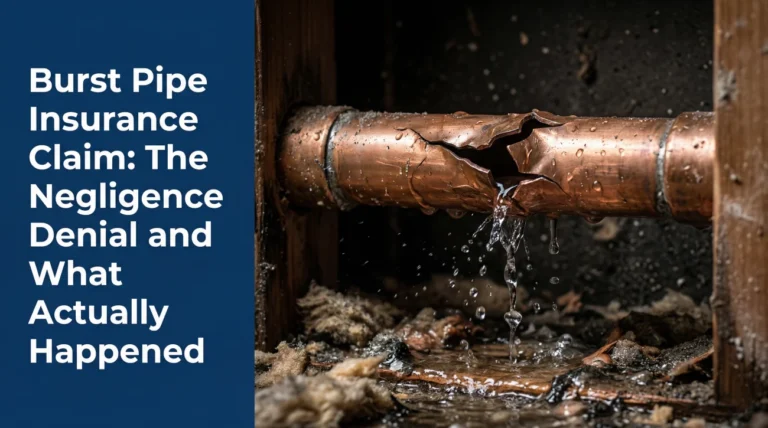

- Water damage claims are frequently underpaid not because of coverage denials, but because the adjuster’s initial scope misses hidden moisture behind walls and under floors.
- A thorough inspection requires moisture readings and thermal imaging; visual-only inspections almost always lead to incomplete settlements.
- Industry standards dictate specific drying equipment and timeframes. If your settlement cuts these short, you risk secondary structural issues and mold.
The Hidden Costs of a Surface-Level Water Damage Inspection
In my years of reviewing property files and sitting across from insurance adjusters, I have seen thousands of water events. A home insurance claim for water damage is the most common type of property claim filed today. It is also, without a doubt, one of the most consistently underpaid. When homeowners reach out to me in frustration, they usually assume the insurance company is refusing to cover the event. But in most standard situations involving sudden appliance failures or internal leaks, the coverage itself is not the core problem. The breakdown happens entirely in the scope of damage.
When you file a homeowners insurance claim for water damage, the initial settlement offer you receive is based strictly on what the adjuster documented during their visit. If they only documented what they could see with their naked eye, your settlement will only cover a fraction of the actual required repairs. Water does not sit still. It travels, it wicks up drywall, and it saturates subflooring. The gap between your actual repair cost and your settlement check almost always comes down to the line items the adjuster missed.
If you are navigating this process, understanding different damage types is a helpful starting point, but water requires a specific strategy. You cannot simply accept a visual inspection. In this guide, I will walk you through exactly how water damage claims are processed, what critical line items are routinely left out of the estimate, and what you need to document to protect your home from long-term structural issues.
Why Water Damage Scope Is So Hard to Get Right
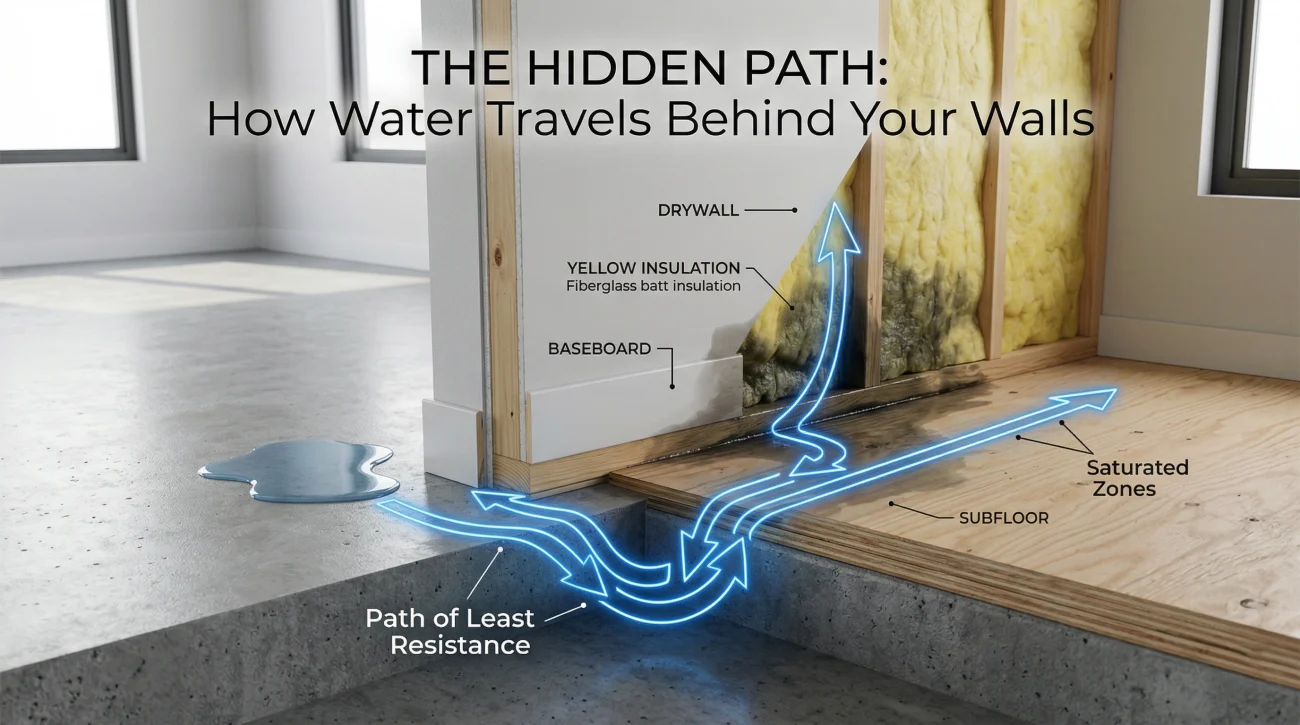
To understand why your water damage claim settlement might be too low, you have to understand how water behaves inside a residential structure. Water follows the path of least resistance. What looks like a contained, three-foot puddle in the middle of your kitchen floor is rarely just a surface issue. Depending on how long the water was sitting, it has likely seeped under your baseboards, traveled under your kitchen cabinets, and saturated the subfloor beneath your continuous flooring.
Insurance adjusters are trained to write estimates based on verifiable evidence. The problem is that many field adjusters rely heavily on visual evidence. If they walk into a room, take a few photos of a warped floorboard, and leave, they are capturing the symptom, not the extent of the disease.
Field Note: In roughly eight out of ten disputed water claims I review, the original adjuster never pulled a moisture meter out of their bag. They scoped the claim entirely based on what was wet to the touch or visibly stained. This single omission is the root cause of thousands of dollars in missing line items.
Materials like drywall, insulation, and particleboard cabinets act like sponges. Drywall will actively wick moisture upward, meaning a leak on the floor can compromise the wall cavity several feet up. If the adjuster does not scope for the removal and replacement of that hidden saturated material, your contractor will eventually uncover it, bringing your repair progress to a halt while you fight for a supplement.
⚠️ Warning: Never assume that a dried surface means the structure is dry. Subfloors and wall cavities can hold moisture for weeks, slowly compromising the structural integrity of your home.
💡 Quick Documentation Tip: Photograph every room where water could have traveled, including adjacent hallways and the ceiling of the room below. Label each photo with the room name and date to track cross-room migration.
What a Thorough Water Damage Inspection Actually Looks Like
When you file an insurance claim for water damage, the adjuster’s inspection is the most critical event in the entire timeline. As a homeowner, you need to know what a proper, professional inspection entails so you can spot a rushed job when it happens.
A thorough adjuster or mitigation professional will not just walk through the affected rooms with a camera. They should employ specific diagnostic tools to track the water’s migration path. If they are evaluating a significant leak, their process should include the following steps.
- 👉 Moisture Readings: The adjuster should use a penetrative or non-destructive moisture meter on baseboards, drywall, and flooring in the primary damage zone and all adjacent rooms.
- 👉 Thermal Imaging: Infrared cameras are used to detect temperature anomalies behind walls and under floors, which often indicate hidden moisture pockets that require further investigation.
- 👉 Secondary Pathway Tracing: If a second-floor bathroom leaks, a proper inspection includes scoping the first-floor ceiling, the insulation between the floors, and the framing holding the structure together.
- 👉 Structural Element Checks: The inspection must go beyond the finish materials (like carpet or tile) to assess the condition of the subfloor, floor joists, and wall studs.
If the adjuster is in and out of your house in under thirty minutes for a multi-room water event, it is highly likely they missed hidden damage. Documenting their process is crucial. You should always take notes on what tools the adjuster used and which rooms they physically entered.
The Most Commonly Missed Line Items in Water Claims

When I review a water damage claim that has been underpaid, I know exactly where to look first. Adjusters using estimating software like Xactimate have to manually enter every single required action. If they miss a step, that money is left out of your pocket. Here are the components that are systematically omitted from initial estimates.
Wall Cavity Damage Below the Visible Waterline
When water hits drywall, the standard repair protocol often requires making a two-foot or four-foot “flood cut” to remove the saturated material, discard the wet insulation behind it, and allow the wooden studs to dry. Adjusters frequently write estimates to merely paint over a water stain, ignoring the compromised material and wet insulation hidden inside the cavity.
Continuous Flooring and Subfloor Damage
If you have continuous hardwood or laminate flooring that runs from your kitchen into your living room, water damage in the kitchen often requires replacing the flooring in both rooms to maintain a uniform appearance and address the subfloor. Adjusters often try to limit the scope to patching a small section, or they approve replacing the surface flooring but omit the cost of tearing out and replacing the swollen subfloor underneath.
The Cabinet Detach and Reset Trap
When water pools under kitchen or bathroom cabinets, it gets trapped. To properly dry the wall and subfloor behind them, the cabinets must often be removed. In professional estimating software, “detach and reset” for cabinetry is a specific line item. Many adjusters leave this blank, hoping you will just place fans in front of the toe-kicks, which almost never dries the hidden wall cavity properly.
Personal Property and Contents
While we focus heavily on the structure, contents are frequently undercounted in a water loss. Area rugs, furniture legs that soaked up water, and appliances damaged by the initial event need to be documented on a separate contents inventory list. Do not throw these items away until the adjuster has formally inspected them.
| Visible Damage Noted by Adjuster | Hidden Damage Frequently Missed in Scope |
|---|---|
| Stained ceiling on first floor | Saturated insulation and compromised floor joists above |
| Warped laminate flooring | Swollen oriented strand board (OSB) subfloor |
| Water around base of kitchen cabinets | Water trapped behind cabinets requiring full detachment |
| Wet carpet in hallway | Moisture wicking into the bottom two feet of drywall |
The Drying Scope Problem and Industry Standards
One of the most complex areas of a home insurance water damage claim process is the mitigation phase, specifically the drying out of your home. Insurers sometimes approve “drying-only” as a resolution when structural materials have actually been saturated past their drying thresholds and require complete removal.
The restoration industry operates on a standard known as IICRC S500. This guideline defines the “class of loss” based on the amount of water and the porosity of the materials affected. The class of loss dictates exactly how many dehumidifiers and air movers are required, and how many days they need to run to achieve a safe, dry standard.
A frequent friction point occurs when the insurance adjuster limits the drying timeline to save costs. For example, your mitigation contractor may determine that your home requires five days of industrial dehumidification based on the IICRC standard. The insurance desk adjuster may push back and only approve three days. If the equipment is pulled early, moisture remains trapped in your home.
Allowing the insurance adjuster to unilaterally decide the drying is complete based on a predefined budget without verifying the moisture levels.
Requiring the mitigation contractor to provide daily drying logs showing moisture readings have returned to normal baseline levels before removing any equipment.
You do not have to be an expert in drying standards, but you must insist on data. Your contractor should provide documented proof that the structure is dry before the rebuild phase begins. When drying is cut short, the consequences go far beyond structural repair. That trapped moisture is a ticking clock for the next phase of damage.
Mold as a Secondary Damage Flag
There is a direct and undeniable link between an incomplete water damage scope and future property hazards. Water damage that is not properly dried or removed creates perfect conditions for mold growth within 24 to 72 hours. If your water event is not being properly scoped for structural drying, you are almost certainly looking at a secondary mold issue down the road.
Insurers handle mold very carefully, often applying strict sub-limits to mold remediation. If the mold grew because the initial water claim was poorly managed or inadequately dried by the insurer’s approved vendors, you may find yourself fighting two battles. Preventing mold begins with a flawless water damage scope. If you are already seeing spots on your drywall or smelling a musty odor, the situation has escalated. You can learn more about the mold claim process to understand how causation impacts your coverage.
The Settlement Gap: Missing Line Items vs Pricing Issues
Even when an adjuster acknowledges the affected rooms, the final dollar amount on your settlement letter is often shockingly low compared to your contractor’s estimate. Many homeowners make the mistake of arguing with the adjuster over the cost of materials, claiming that drywall or labor is more expensive in their zip code than the insurer is offering.
In my experience, while pricing discrepancies exist, they are rarely the primary cause of a massive shortfall. The gap between what you receive and what repairs actually cost in water damage claims is typically a scope gap, not a pricing gap. The issue is not that the adjuster priced the baseboards too low; the issue is that they completely omitted the cost to detach and reset the plumbing fixtures, remove the saturated insulation, and run the heavy drying equipment.
The ACV vs RCV Factor
Another reason for a shockingly low initial check is depreciation. Standard policies typically apply Actual Cash Value (ACV) to your initial payout, withholding depreciation based on the age of your home’s structural materials. Even things like subfloor, drywall, and insulation are heavily depreciated. You only unlock the Recoverable Depreciation (RCV) after repairs are completed and invoices are submitted. Knowing the difference is crucial so you do not accept an ACV check as the final word.
To fight a low settlement, you need to request the itemized estimate from your adjuster. You cannot argue a claim effectively if you do not know exactly what line items they included.
Request Estimate + Compare Line Items + Submit Contractor Supplement
Here is a practical, calm way to request this information without sounding aggressive. Send this via email so you have a written record.
Hello [Adjuster Name],
Thank you for providing the initial settlement figure for my recent water damage claim. To help my contractor understand the approved scope of work, please send over the complete, itemized Xactimate estimate detailing the line items and quantities you have included.
Once my contractor reviews the line items against the actual damage at the property, we will forward any necessary supplemental documentation for your review.
I appreciate your help in getting this resolved efficiently.
Best regards,
[Your Name]
💡 Pro Tip: Always keep your communication focused on the “scope of work.” Adjusters respond much better to discussions about missing line items than emotional arguments about the final dollar amount.
What happens next: Once you submit a supplement with your contractor’s findings, the adjuster has a set timeframe to review and respond. They may approve it, ask for more photos, or send a reinspector. If negotiations stall and the gap remains large, this is the exact moment you need to consider escalating the claim.
Signs Your Water Damage Claim Scope May Be Incomplete
Knowing when to push back is half the battle. Because the claims process is foreign to most people, they accept the initial check assuming the adjuster caught everything. Based on hundreds of files I have audited, here are the most common indicators that your water damage claim is facing a severe scope gap.
- 🚩 The inspection was rushed: An adjuster visit under 30 minutes for a multi-room event is a massive red flag. See the inspection section above, it is physically impossible to assess hidden damage in that timeframe.
- 🚩 No diagnostic tools were used: The adjuster relied entirely on visual confirmation with no moisture meter or thermal scan.
- 🚩 Surface-only settlement: The estimate covers cosmetic surface repairs (like painting drywall or replacing carpet pads) but includes zero line items for wall cavity inspection, insulation replacement, or subfloor work.
- 🚩 Drying timelines cut short: The drying equipment approved by the desk adjuster does not match the actual class of loss, or they forced the mitigation team to pull equipment before daily moisture logs proved the structure was dry.
- 🚩 Contractor mismatch: Your independent contractor’s scope of work is substantially wider than the adjuster’s estimate for the exact same event. This usually means the contractor is factoring in code requirements and hidden damage that the adjuster ignored.
If you recognize more than one of these signs in your current situation, your claim is highly likely to be underpaid. The longer you wait to address these missing items, the harder it becomes to secure the funds you need to restore your home safely.
Final Thoughts on Protecting Your Property
An incomplete water damage scope is the norm in the insurance industry, not the exception. The burden of proving the true extent of the loss almost always falls back on the homeowner. While you can certainly spend weeks reviewing policy limits and arguing line items over the phone, missing critical structural damage can cost you tens of thousands of dollars in future repairs.
Whether your specific claim has missing line items depends entirely on what the adjuster documented and what your water event actually damaged. Before you sign any final release documents or accept a settlement that feels light, you have the right to a second opinion. Exploring the option of an independent scope review can help identify exactly what was missed, ensuring your home is rebuilt correctly the first time.
❓ FAQ
💧 How do I know if the adjuster missed hidden water damage?
If the adjuster only performed a visual inspection without using a moisture meter or thermal imaging camera, they almost certainly missed hidden moisture behind drywall, under cabinets, or within the subfloor.
📸 What should I photograph before the drying company arrives?
Take wide-angle shots of every affected room, close-ups of the water source, images of standing water, and pictures of all damaged personal property before anything is moved or torn out by the mitigation crew.
⏱️ How long does the insurance company have to process my water claim?
Timelines vary by state. Check your policy’s claim reporting section and your state’s department of insurance website for the specific deadlines that apply to your situation.
🛠️ Can I start repairs before the adjuster approves the water damage settlement?
You must take immediate steps to mitigate further damage (like stopping the leak and extracting water), but you should wait for the adjuster to inspect and approve the scope before beginning permanent structural rebuilds.
📝 What documents do I need to prove my water damage claim?
You need before-and-after photos, a plumber’s invoice detailing the cause of the leak, daily drying logs from your mitigation company, and a detailed, itemized estimate from your repair contractor.
💰 Why is my water damage settlement check so low?
Low initial checks are usually due to the adjuster missing critical scope items (like subfloor repair and wall cavity drying), applying depreciation (ACV), or holding back recoverable depreciation until repairs are completed.
🚪 Will my insurance cover water damage in adjacent rooms?
Yes, if the water naturally migrated to adjacent rooms from a single covered event, the damage in those surrounding areas should be included in the claim. This must be proven with continuous moisture readings.
🔍 Do I need to find the exact source of the leak for my claim?
Yes, the source of the leak dictates coverage. You should hire a licensed plumber to find and fix the leak, and have them write a detailed invoice stating exactly what failed suddenly and accidentally.
🌬️ What happens if the insurance company does not approve enough drying days?
If they cut drying short, demand that your mitigation contractor provide documented moisture logs showing the structure is still wet. Submit these logs to the adjuster as proof that the IICRC drying standard has not yet been met.
🛑 Can my insurer close my water claim if I disagree with the scope?
An insurer may issue a payment for undisputed amounts and administratively close the file, but as long as you are within your policy’s time limits, you can submit supplemental estimates from your contractor to reopen negotiations.
Damage type affects coverage, documentation, and payout. These connect the dots.
- How the settlement process works after damage is reported
- Which parts of your policy apply when damage is involved
- How your damage type affects what the insurer is required to pay
- Whether the damage you have is actually worth filing for
- What happens when the claim you filed gets rejected
- How independent representation changes what gets documented
- When a disputed claim moves into legal territory
Each damage type has its own patterns. See what adjusters commonly miss.
- Whether your damage assessment left money on the table
- What the inspector who came to your home was actually there to do
- The parts of water damage that standard inspections routinely miss
- What fire and smoke assessments leave out of the scope
- Why the insurer's roof estimate is almost always lower than the roofer's
- When a denial crosses into bad faith and needs legal leverage
- The four options after a denial, including one most homeowners skip
Disclosure: I'm sharing my personal industry experience, but I am not an attorney or a licensed insurance agent. The guides on this site are for informational purposes to help you understand the operational side of property claims: process, organization, and documentation. Every policy is unique, so please defer to your specific policy language. For legal interpretation, contested situations, or binding advice, always consult a licensed professional in your jurisdiction.