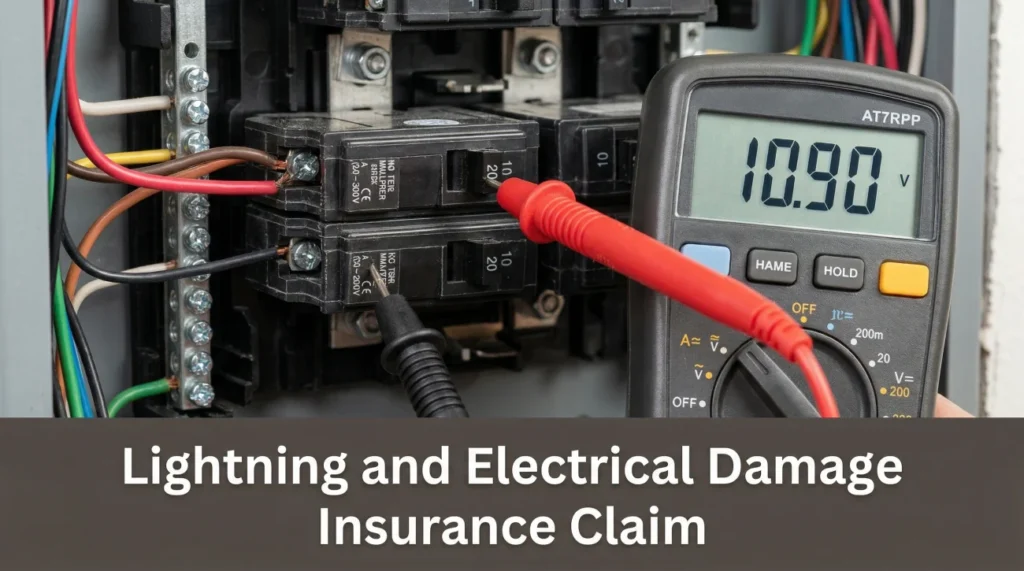
- Lightning strikes are named covered perils, but insurers frequently dispute whether the lightning actually caused your electrical damage or if it was just “old age.”
- Do not throw away any damaged electronics, appliances, or melted wiring before the adjuster inspects them.
- If your HVAC system is damaged, you need an independent technician to explicitly document “surge-specific failure” rather than general mechanical wear.
- The burden of proof regarding pre-existing electrical issues falls on the insurer, not you. They must demonstrate the failure was not caused by the surge.
- You can independently verify the date and time of the strike using the National Lightning Detection Network to solidify your timeline.
The Silent Aftermath of a Strike: Why Coverage Does Not Guarantee a Fair Payout
When lightning strikes your property, the immediate aftermath is chaotic. You might hear a deafening crack, see a flash, and suddenly find that half the house has gone dark. The natural assumption is that because lightning is universally listed as a covered peril on standard homeowners policies, filing a claim will be a straightforward process of replacing what was fried.
In my time reviewing property claims, I have seen exactly how this expectation crashes into reality. The battleground in lightning claims is almost always about causation, rarely about whether the policy includes coverage.
You know a surge just destroyed your electrical panel, your refrigerator, and your central air conditioning. The insurance adjuster, however, arrives, looks at the manufacturing date on your compressor, and suggests that the unit simply failed due to mechanical wear and tear. Suddenly, you are put in a position where you feel forced to prove that the storm was the culprit.
I recently reviewed a file where an entire home office setup was destroyed during a severe thunderstorm. The adjuster approved the replacement of a $50 surge protector but denied the $3,000 computer connected to it, citing ‘lack of physical evidence of arc damage.’ It took independent diagnostic reports to overturn the decision.
Unlike other home insurance damage categories where the destruction is visibly obvious (like a collapsed ceiling), electrical surge damage is often invisible to the naked eye. This invisibility gives insurers room to push back. This guide explains exactly how to document your loss, how to handle adjusters who blame pre-existing conditions, and how to protect your payout from being drastically reduced.
The Causation Trap: Lightning vs. Wear and Tear
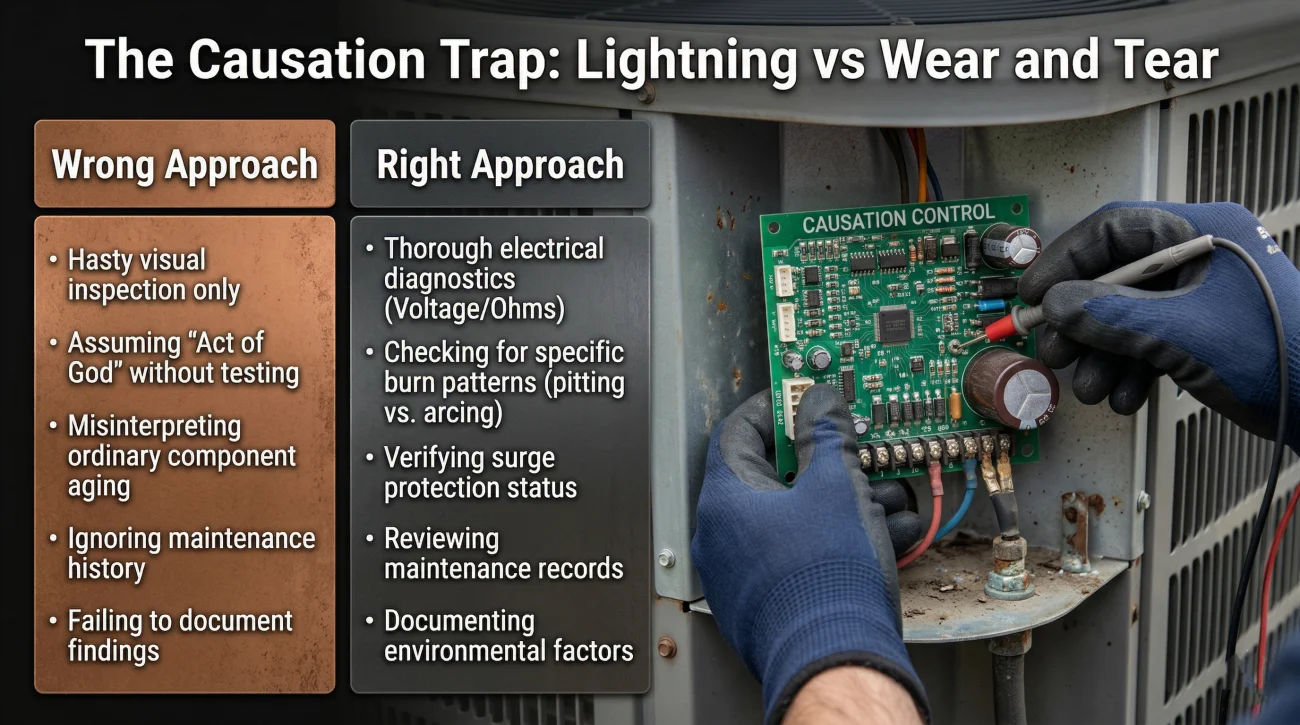
To understand why these claims go sideways, you have to understand the mechanics of the event and the mindset of the insurance company. A lightning strike causes a massive, sudden surge of electricity to travel through a home’s wiring. This voltage spike can instantly destroy the delicate microprocessors in modern appliances, melt wiring insulation, and permanently damage the windings inside major electrical motors.
When an adjuster evaluates your claim, their job is to confirm that the damage was caused by the covered peril (the sudden and accidental lightning strike) and not an excluded peril (gradual deterioration, age, or poor maintenance). Because insurers know that appliances and electrical panels degrade over time, they often default to skepticism when older equipment fails right after a storm.
Assuming the adjuster will automatically connect the broken appliances to the storm simply because you told them the timeline.
Providing written diagnostics from licensed technicians that specifically rule out age and confirm power surge as the cause of failure.
Insurers will attempt to attribute at least some of the damage to pre-existing electrical issues. If your electrical panel was twenty years old, they might argue it was already out of compliance or failing. If your HVAC unit is ten years old, they will suggest the compressor finally gave out. Your goal is to systematically remove these excuses through proper documentation.
Step 1: Documenting the Lightning Event Itself
The most critical first step in a lightning damage claim is establishing that a strike actually occurred at or dangerously near your property. Without establishing the event itself, any causation arguments regarding your damaged property become incredibly difficult to win.
Many homeowners rely on simply telling the adjuster, “It was a really bad storm.” That is not documentation. You need objective data that ties the electrical failure to a specific meteorological event.
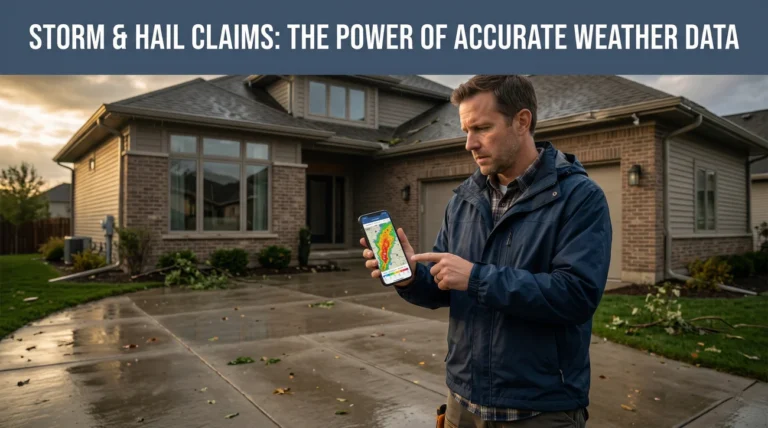
💡 Pro Tip: You can utilize data from the National Lightning Detection Network (NLDN). This database tracks the exact time, location, and magnitude of lightning strikes across the country. To do this practically, you can hire a private meteorological firm to generate a certified weather report that pulls NLDN data for your exact address and time window. Presenting this formal report gives the adjuster an objective timestamp that is very difficult to dispute.
You should also gather local news reports, weather service warnings from the day of the event, and written statements from neighbors who may have also experienced power surges or damage. If the same storm brought hail that battered your roof, remember that hail and lightning are distinct perils. They require separate documentation processes, even if they happened on the same afternoon.
Step 2: The Whole-Home Impact Inventory
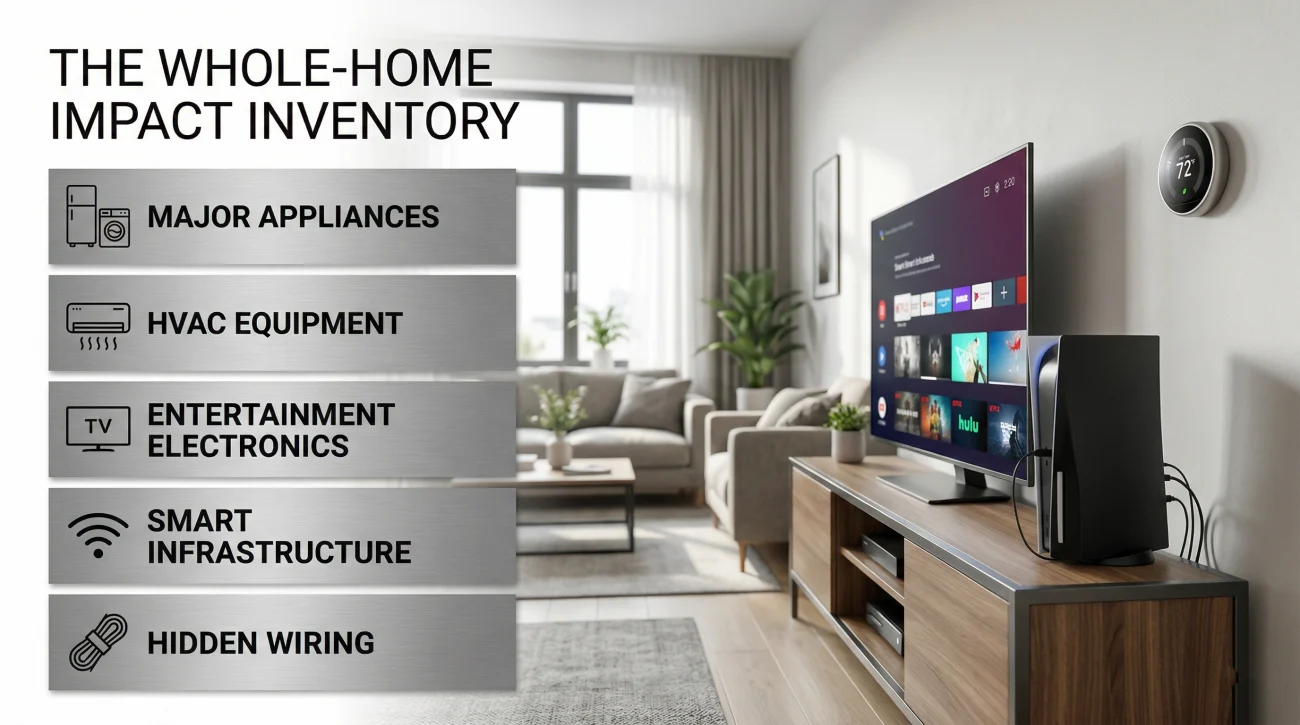
A lightning strike that enters through the main electrical panel can travel through every circuit in the house. The damage is rarely isolated to just one room. Homeowners frequently make the mistake of only claiming the most obvious items, leaving thousands of dollars of covered damage off the table.
You must perform a meticulous, whole-home inventory immediately after it is safe to do so. Check every system that is hardwired or plugged into an outlet.
- 🔌 Major Appliances: Refrigerators, ovens, dishwashers, washers, and dryers. Modern versions rely heavily on sensitive control boards that fry easily.
- 🔌 HVAC Equipment: Condensers, air handlers, thermostats, and furnace control modules.
- 🔌 Entertainment and Electronics: Televisions, gaming consoles, desktop computers, routers, and sound systems.
- 🔌 Infrastructure: Garage door openers, smart home hubs, security cameras, hardwired smoke detectors, and GFCI outlets.
- 🔌 Hidden Wiring: Have an electrician check the panel and the insulation of the wiring itself for signs of melting or arcing.
In my experience, the best way to handle this phase is to hire an electrician to physically trace the surge path from the point of entry (usually the main panel or AC disconnect) outward to all branch circuits. This systematically documents the damaged equipment rather than just guessing what broke.
⚠️ Warning: Never throw away damaged equipment before the adjuster inspection. I have seen claims denied entirely because the homeowner tossed a fried television into the dumpster, destroying the physical evidence the adjuster needed to approve the line item.
If you must replace a critical item immediately (like a refrigerator to save your food), take comprehensive photos of the unit, record the model and serial numbers, keep the original purchase receipts if you have them, and save the damaged unit in the garage until the claim is settled.
While cataloging fried televisions and routers is straightforward, there is one item on your inventory that will inevitably cause the most friction with your insurer. That brings us to your heating and cooling system.
The HVAC Battleground: Compressors and Control Boards
Heating, Ventilation, and Air Conditioning (HVAC) systems represent one of the most expensive components damaged by lightning, and consequently, they are the most heavily disputed by insurance companies.
When a power surge hits an AC condenser outside, it often destroys the compressor or the electronic control board. Insurers are notoriously reluctant to pay for full HVAC replacements. They will often send an adjuster who simply looks at the rusted exterior of the unit and writes it off as a mechanical failure due to age. I have sat across from adjusters who tried to deny an $8,000 condenser replacement simply because there was surface rust on the casing.
Adjusters are not licensed electricians or HVAC technicians. I frequently see them make surface-level assessments on complex equipment. If an adjuster denies your HVAC claim without actually testing the control board or measuring the compressor windings, their assessment is incomplete.
To win an HVAC lightning claim, you need an independent, licensed HVAC technician to inspect the unit and provide a written assessment. The language your technician uses in this report is critical. If they write, “Unit is dead, needs replacement,” the insurer will likely deny it. The report must specifically address the cause of death.
“Please inspect the system and provide a written diagnostic report. If you find evidence of an electrical surge, please explicitly state ‘failure due to high voltage surge’ or ‘lightning damage to control board.’ It is crucial that the report notes whether the failure pattern is consistent with a surge event rather than standard mechanical wear and tear.”
What If the Strike Hit a Neighbor’s Property?
A common gray area I see in the field involves indirect strikes. Lightning does not have to hit your roof directly to fry your electronics. A strike to a neighbor’s tree, a shared utility pole, or an underground conduit can send a massive surge traveling through shared lines right into your electrical panel.
Insurers sometimes push back on these claims by arguing the event happened off-property. However, most standard policies cover the resulting damage to your property from the surge, regardless of where the bolt initially grounded. Coverage for indirect surges typically depends on your specific policy language, which is exactly why having an electrician trace the surge path from the grid entry point is so vital. It proves the external surge breached your system and caused the interior damage.
The “Old Panel” Excuse and the Burden of Proof
If your home has older wiring or an electrical panel that has seen better days, the insurance company will likely try to use this history against you. They may argue that a previous electrical short caused the fire or that the system failed because it was outdated, completely ignoring the fact that a lightning strike was the triggering event.
Here is the operational reality that many homeowners do not realize: if you have a named covered peril (lightning) and evidence that the event occurred, the burden is on the insurance company to prove that the damage was NOT caused by the lightning. It is not entirely on you to prove that every single wire was in perfect condition the day before.
Insurers often rely on the homeowner’s lack of confidence to push through a denial based on “pre-existing electrical failure.” They will ask leading questions to build a case against you. Be mindful of how you answer. If an adjuster asks whether your lights ever flickered in the months before the storm, do not casually agree just to be conversational or polite.
📌 Note: Do not guess about the prior condition of your electrical system. Stick to the facts: the system was functioning normally before the storm, the lightning strike occurred, and the system immediately stopped functioning afterward.
If the insurer denies the claim based on pre-existing conditions, request their engineering report. If they did not send a licensed electrical engineer or a qualified investigator to definitively prove a pre-existing short caused the failure, understanding how to navigate a formal coverage rejection becomes your next necessary step.
Signs Your Lightning Claim Causation Is Being Disputed
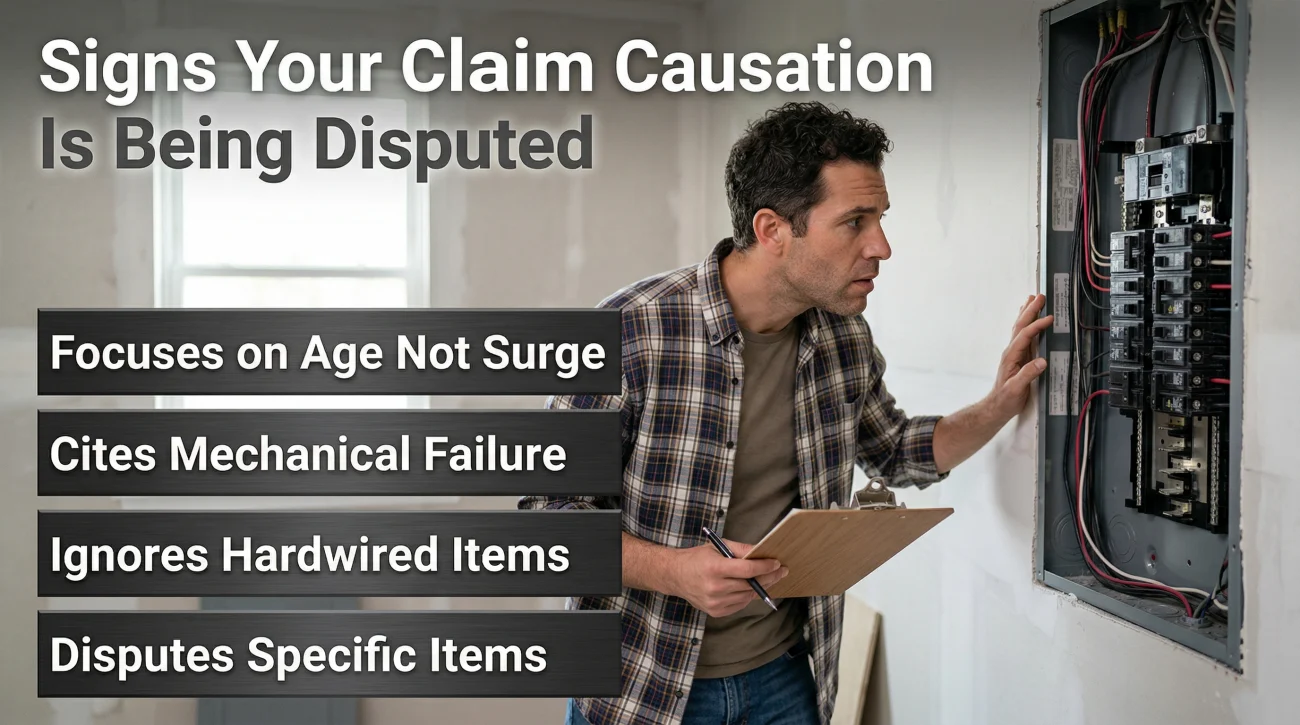
Claims do not usually go wrong all at once; they derail in slow motion through a series of subtle adjuster tactics. By the time the official settlement letter arrives, the scope has already been minimized. You need to recognize the warning signs early in the process.
These are the common red flags that indicate the insurer is preparing to undervalue or deny your electrical damage claim based on causation:
- 🛑 The adjuster spends significant time asking about the age of your electrical panel, appliances, and HVAC system, rather than investigating the surge path.
- 🛑 Your HVAC denial cites “mechanical failure” or “maintenance issues” without the insurer having sent a specialized technician to open and test the equipment.
- 🛑 The settlement covers some electrical components (like a few fried smart TVs) but completely ignores others (like the refrigerator or hardwired smoke detectors) without providing a clear, line-item explanation for the exclusion.
- 🛑 The insurer acknowledges that a lightning strike occurred in your area, but formally disputes which specific items inside your home were damaged by that specific event.
- 🛑 The adjuster asks you to dispose of damaged property “to clear space” before a formal inventory has been signed off and agreed upon.
Protecting Your Scope When the Insurer Pushes Back
Lightning causation disputes are rarely won by arguing with the adjuster over the phone. They are won or lost strictly on documentation. The combination of a verified strike record, comprehensive whole-home inventory, and independent technician assessments documenting surge-specific failure patterns is what forces an insurer to honor the policy.
As a general rule, if your dispute is over a $500 television, you can usually handle the pushback yourself. But if the insurer is denying a $12,000 HVAC replacement and a $4,000 main panel upgrade by citing “wear and tear”, that is the specific threshold where bringing in an independent advocate makes sense.
A professional can evaluate the exact language the insurer is using to deny the claim and counter it with the correct technical evidence. For complex electrical claims, having a claims expert who specializes in electrical and fire-related surge events review your file is often the difference between a minor payout for a few TVs and a full recovery for a compromised electrical infrastructure.
Final Thoughts on Surge and Electrical Claims
Filing a claim for lightning damage is an exercise in patience and meticulous record-keeping. The insurance company’s initial posture will often be one of skepticism, treating your damaged property as a series of unrelated mechanical failures rather than the result of a single, catastrophic power surge.
Instead of waiting for the adjuster to tell you what they are willing to cover, take control of the narrative from day one. Commission the weather report, hire the technician to write a surge-specific diagnostic, and force the insurer to formally refute your evidence rather than the other way around. You paid for coverage against sudden and accidental loss, and with the right professional documentation, you can ensure that is exactly what they pay for.
❓ FAQ
⚡ Does homeowners insurance cover a direct lightning strike?
Yes, lightning is a named covered peril in almost all standard homeowners insurance policies. It covers fire caused by the strike as well as power surges that damage the home’s electrical systems and connected personal property.
🔌 How do I prove lightning damaged my electronics?
You prove it by combining weather data confirming a strike with written diagnostic reports from licensed repair technicians stating the equipment failed due to an electrical surge, not normal mechanical wear.
💡 Will insurance pay for a new electrical panel after a surge?
If the surge melted wiring, damaged breakers, or compromised the panel’s safety, insurance should cover the replacement. However, adjusters frequently try to deny this by claiming the panel was simply old and failed due to age.
❄️ What happens if lightning fried my HVAC system?
You must get an independent HVAC technician to test the compressor and control board. If they document that a high-voltage surge caused the failure, the insurer is responsible for the repair or replacement cost.
📺 Do I need to keep damaged electronics for the insurance adjuster?
Absolutely. Never throw away any damaged appliance, TV, or computer until the adjuster has physically inspected it or the insurer has given you written permission to dispose of it. Throwing it away can result in an immediate denial.
⏱️ How long do I have to file a lightning claim?
Most policies require you to report the damage “promptly.” While the exact filing window varies by policy, reporting the surge within a few days is critical to connect the damage to the specific storm event.
🚫 Can my insurance deny a power surge claim?
Yes, they can deny it if the surge was caused by the local utility company or an internal wiring fault rather than lightning, depending on your specific policy endorsements. Lightning-caused surges are covered, but grid surges sometimes require separate coverage.
🌩️ What is the difference between a power surge and a lightning strike claim?
A lightning claim involves a surge specifically generated by a weather event, which is widely covered. A general power surge claim involves grid fluctuations from the power company, which some basic policies exclude unless you have a specific artificial electrical surge endorsement.
💰 Does my deductible apply to lightning damage?
Yes, your standard homeowners deductible will apply to the total approved payout of the claim. If your damaged electronics amount to less than your deductible, the insurer will not issue a payment.
👷 Should I call an electrician before the insurance adjuster arrives?
Yes, if there is a safety hazard or you have no power, call an electrician immediately to make the home safe. Have them document their findings on the invoice, taking photos of any arcing or melted wires before doing repairs.
Damage type affects coverage, documentation, and payout. These connect the dots.
- How the settlement process works after damage is reported
- Which parts of your policy apply when damage is involved
- How your damage type affects what the insurer is required to pay
- Whether the damage you have is actually worth filing for
- What happens when the claim you filed gets rejected
- How independent representation changes what gets documented
- When a disputed claim moves into legal territory
Each damage type has its own patterns. See what adjusters commonly miss.
- Whether your damage assessment left money on the table
- What the inspector who came to your home was actually there to do
- The parts of water damage that standard inspections routinely miss
- What fire and smoke assessments leave out of the scope
- Why the insurer's roof estimate is almost always lower than the roofer's
- When a denial crosses into bad faith and needs legal leverage
- The four options after a denial, including one most homeowners skip
Disclosure: I'm sharing my personal industry experience, but I am not an attorney or a licensed insurance agent. The guides on this site are for informational purposes to help you understand the operational side of property claims: process, organization, and documentation. Every policy is unique, so please defer to your specific policy language. For legal interpretation, contested situations, or binding advice, always consult a licensed professional in your jurisdiction.