
- The public adjuster process starts with a free, no-obligation initial review of your damage and policy to determine if there is actually room to increase your settlement.
- Once you sign a contract, a “communication blackout” occurs between you and the insurer; the public adjuster takes over all direct negotiations, emails, and phone calls.
- A properly run engagement takes anywhere from 30 to 90 days, involving a highly detailed independent inspection, specialized software scoping, and structured back-and-forth negotiations with the carrier.
Navigating the Unknown Timeline
Most homeowners who hire a property loss professional do so because they feel overwhelmed, confused, or actively stonewalled by their insurance carrier. But often, immediately after signing the representation contract, a new type of anxiety sets in. You hand over your policy documents, you sign the paperwork, and suddenly, the phone stops ringing. The constant emails from the insurance desk adjuster completely halt.
I have seen this transition cause unnecessary panic firsthand. Clients often wonder if the sudden silence means their claim has been forgotten. In reality, that silence is the very first sign that the system is working exactly as it should. If you are trying to understand the general overview of their professional duties, you likely know they advocate for you. But understanding the day-to-day mechanics is entirely different.
Here is what a properly run engagement actually looks like, step by step, based on how I have seen the most effective professionals operate in the field. Knowing this sequence is the only way to tell if your representative is actually doing their job, or if your claim is stalling out.
What to Prepare Before the First Call
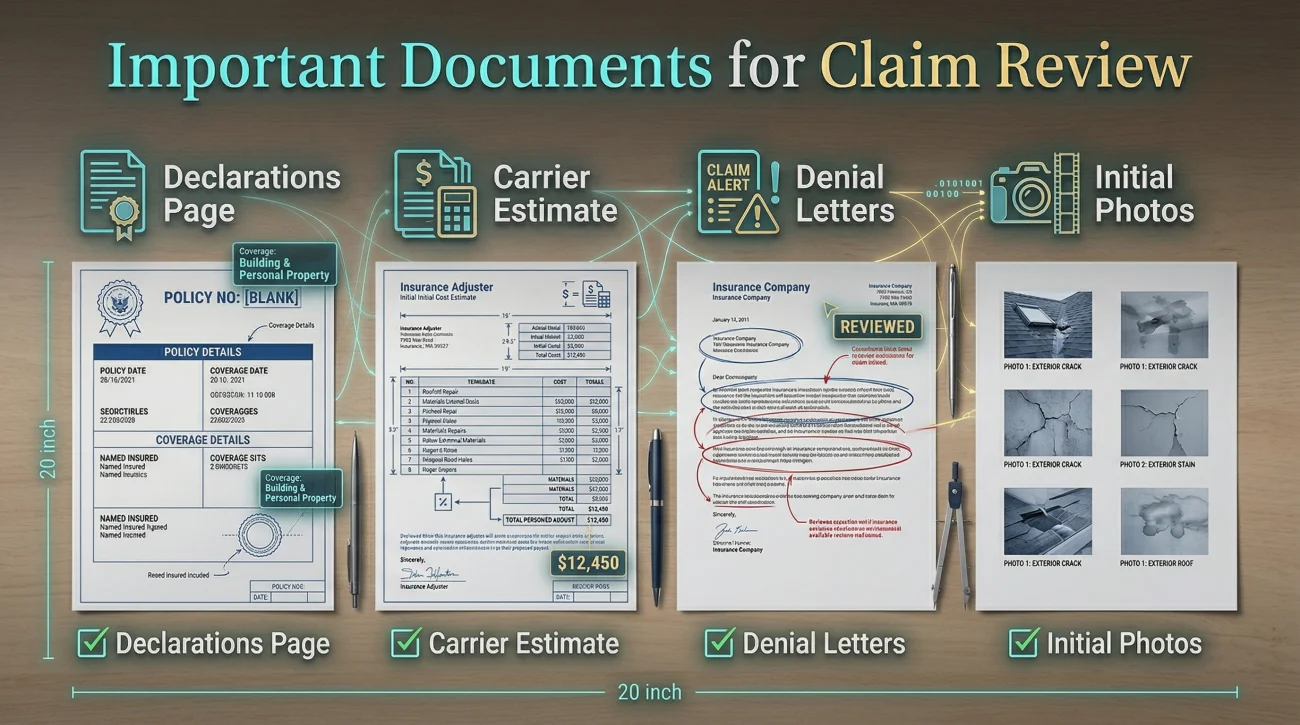
If you are considering bringing in a professional, your first conversation will be much more productive if you have the right documents ready. I always ask homeowners to gather a few specific items before our initial meeting to help evaluate the claim effectively:
- Your Declarations Page: Not just the summary bill, but the actual policy document showing your specific coverage limits, deductibles, and endorsements.
- The Carrier’s Estimate: If the insurance company has already made an offer, we need to see their exact line-item breakdown to know what they missed.
- Denial Letters: If any part of the claim was denied, the specific language the carrier used is critical.
- Initial Photos: Any photos you took on the first day of the damage, before any mitigation or tear-out occurred.
Step 1: The Initial Review (Before You Sign Anything)
A reputable professional does not simply take every claim that comes their way. Before any contract is signed, there must be a triage phase. During this step, the adjuster will review the documents you gathered earlier and inspect the physical damage itself.
This initial review is completely free and carries no obligation. The goal is simple: they need to determine if there is enough financial room in the claim to justify their involvement. If your total damage is $5,000 and your deductible is $2,500, a good adjuster will tell you straight away that hiring them will not leave you with enough money to fix your home. They will advise you to proceed on your own.
When I evaluate a file initially, I am not just looking at the broken pipes or burnt framing. I am looking at the policy limits, the specific endorsements, and the carrier’s initial denial reasoning. If the carrier denied a claim based on a strict, unbreakable exclusion like earth movement, taking the case is a waste of the homeowner’s time. We only step in when we see a valid argument for coverage or a severely under-scoped estimate.
If they determine there is a viable path forward, they will present their contract and explain their contingency fee structure. Only after you are comfortable with the terms do you move to the official onboarding phase.
Step 2: Representation Notification and the “Communication Blackout”
The moment you sign the contract, the dynamic of your claim changes immediately. The very first action taken on your behalf is the drafting and submission of a Letter of Representation (LOR). This legal document is sent directly to your insurance company, officially notifying them that you have retained professional representation.
This triggers what I like to call the “communication blackout.” Once the carrier receives this letter, they are legally and procedurally required to stop contacting you directly. All emails, phone calls, and letters regarding the settlement must be routed through your new representative.
Sample Internal Notification Routine:
For many homeowners, this sudden silence is a massive relief. You no longer have to field aggressive phone calls while at work or try to decipher complex insurance jargon. If you want to dive deeper into how this dynamic shifts the balance of power, our comparison of the exact difference in their loyalties explains the structural conflict of interest perfectly.
Step 3: The Independent Scope Build and Re-Inspection
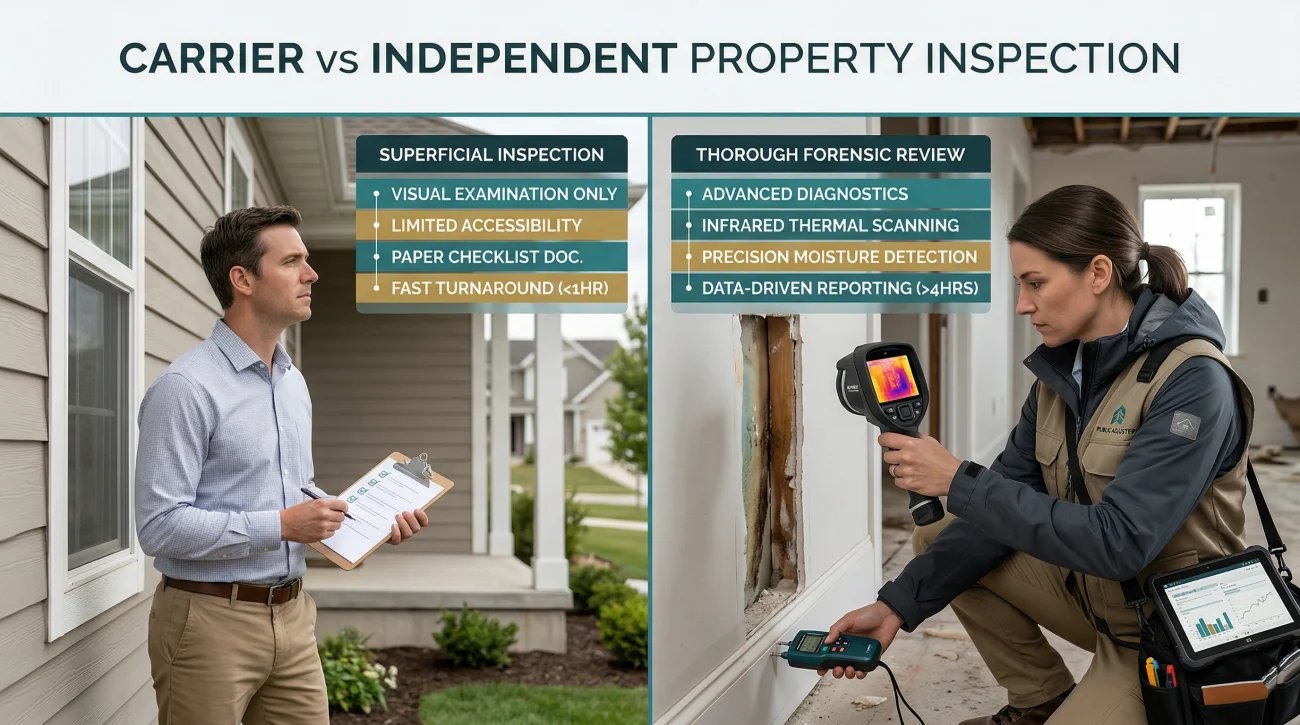
With the carrier officially notified, the real physical work begins. Your representative will conduct an independent, forensic re-inspection of your property. This is fundamentally different from the brief walk-through the insurance company’s field adjuster likely performed.
I always advise homeowners to watch this process closely. A proper independent inspection for a moderate loss usually takes several hours. We bring in moisture mapping tools, thermal imaging cameras, and structural measurement devices. Every single baseboard, linear foot of drywall, and specific grade of cabinetry is documented.
Lasts 20 to 45 minutes. Takes a few dozen wide-angle photos. Focuses heavily on the obvious, visible damage and assumes surrounding materials can be salvaged or patched.
Lasts 2 to 4 hours. Takes 300+ macro and micro photos. Looks for secondary damage like water migration behind cabinets, smoke webbing in HVAC systems, and continuous flooring match issues.
Following the physical inspection, the data is translated into an incredibly detailed line-item estimate. This is almost universally done using Xactimate. If you are unfamiliar with how this standard software fits into the bigger picture, reviewing the standard timeline of a typical property claim will give you excellent context.
Step 4: Submission and Professional Negotiation
Translating the damage into software is only half the battle. Once the independent scope is complete, it becomes the foundation for the most critical phase: formal submission and negotiation. The evidence packet sent to the desk adjuster is massive, often including the photo report, thermal imaging data, local building code requirements, and specialized drying logs.
This begins the negotiation phase, which is rarely a single phone call. It is a structured, highly detailed back-and-forth process. In the negotiations I manage, the debate rarely centers on vague dollar amounts. Instead, we argue over specific construction realities.
- 📝 The Repair vs. Replace Battle: The carrier’s adjuster might have written an estimate to simply “patch” a 15-year-old roof. We counter with manufacturer guidelines proving that patching brittle shingles is impossible without causing further damage, legally necessitating a full roof replacement.
- 🪵 The Matching Dispute: If water ruined half of your continuous hardwood flooring, the carrier often tries to pay only for the damaged boards. We argue that replacing only damaged boards creates a visible mismatch, making full replacement the only viable path to a proper repair.
- 🔍 The Re-Inspection (Optional): If the financial gap is massive, the carrier will often send a more senior adjuster or a third-party engineer to re-verify the damage. Your representative attends this meeting to physically point out the evidence the carrier ignored.
Because these debates involve building codes and depreciation metrics, your representative handles the friction directly, allowing the process to move forward without requiring you to become a construction expert overnight.
Step 5: Resolution, Settlement, and the Check
The negotiation phase ultimately concludes in one of three ways. Understanding these outcomes prepares you for the final stages of the process.
First, the most common outcome is a supplemental agreement. In my experience, this is rarely a scenario where the carrier simply capitulates and pays the exact asking price on day one. Instead, it is a hard-fought compromise where the irrefutable physical evidence forces the carrier to concede on the major missing line items. They agree to issue a supplemental payment, and the claim reaches an amicable conclusion without needing further escalation.
Second, if the carrier refuses to acknowledge the damage and a massive valuation gap remains, your representative will likely recommend invoking the Appraisal Clause. This is a binding dispute resolution process written directly into most policies. Your representative will transition from a negotiator to your designated “Appraiser,” defending your scope against the carrier’s designated Appraiser. You can learn more about how this specific mechanism forces a resolution in our guide to the appraisal clause process.
Finally, there are rare cases where the carrier stands firm on a total coverage denial based purely on policy interpretation. This brings us to an important boundary regarding what your representative is legally allowed to do.
What This Professional Cannot Do For You
While a skilled representative can completely change the financial trajectory of a scoping dispute, there are hard legal lines they cannot cross. In every state, public adjusters are strictly prohibited from practicing law.
They cannot file a lawsuit on your behalf. They cannot threaten the insurance company with bad faith litigation. They cannot subpoena documents or force an insurer’s executives to sit for a deposition. Their leverage comes entirely from physical evidence, advanced scoping software, and policy knowledge.
💡 Pro Tip: If your claim is denied strictly because the carrier is twisting the legal interpretation of a complex policy exclusion, rather than disputing the physical cost of the damage, you have crossed out of scoping territory and into legal territory. Knowing when to pivot is crucial. We have a full breakdown comparing the two paths in our lawyer vs adjuster comparison guide.
The Realistic Timeline: How Long Does It Actually Take?
Patience is the hardest part of the process. Homeowners often expect results in a week. In my experience managing these timelines, a standard engagement runs anywhere from 30 to 90 days from the moment the contract is signed to the moment the supplemental check is printed. Here is a realistic breakdown of where that time goes.
| Phase of the Engagement | Typical Duration | What is Happening Behind the Scenes |
|---|---|---|
| Initial Inspection & Scope Build | 5 to 10 Days | Site visits, photo logging, formatting the Xactimate estimate, and building the evidence packet. |
| Carrier Review Period | 14 to 30 Days | The carrier’s desk adjuster analyzes the hundreds of line items and compares them against their original file. |
| Active Negotiation & Re-inspection | 14 to 45 Days | Trading revised estimates, coordinating secondary field visits with engineers, and finalizing the agreed pricing. |
| Check Issuance & Payment Processing | 7 to 14 Days | The carrier issues the supplemental check, usually made jointly payable, which must be endorsed before funds clear. |
Keep in mind that during catastrophic events, such as widespread hurricanes or regional wildfires, these timelines can easily double because the insurance carriers are physically overwhelmed with volume. If you are considering when exactly you should bring someone in, earlier is always better to get ahead of this bureaucratic bottleneck.
PAIN SECTION: Signs Your Engagement is Broken
While the negotiation process can stretch out for weeks, total silence is not normal. It is crucial to distinguish between a carrier who is stalling and a representative who is simply not doing their job. If the insurance company is legitimately overwhelmed, a good adjuster will forward you their weekly follow-up emails so you know they are actively pushing the file.
However, in claims I have reviewed where the relationship truly broke down, the delay was entirely on the representative’s side. If your engagement is not running correctly, it usually looks like this:
- You have gone more than two full weeks without a single update, email, or returned phone call regarding the status of the negotiation.
- The insurance company is still calling you directly because your representative never actually filed the Letter of Representation with the carrier.
- When you ask to see the physical documentation, they cannot produce a detailed, line-item written scope of loss for your review.
- The professional directs you to call the insurance desk adjuster yourself to “speed things up” or check on the status. (This entirely defeats the purpose of hiring them).
A well-run engagement follows a highly predictable, professional sequence. The representative does the heavy lifting, documents everything meticulously, and communicates proactively. If you are experiencing the red flags above, or if you are at the very beginning of your journey and want to ensure you partner with a vetted professional, you need to figure out if your situation warrants an independent review before your claim stalls permanently.
Final Thoughts on Trusting the Process
Bringing an independent advocate into your property claim fundamentally shifts the balance of power. The sudden shift in communication and the wait times can feel unsettling at first.
But a property claim is essentially a highly technical audit of your home’s physical state. Taking the time to properly document, scope, and negotiate your damage ensures that the final settlement reflects the true cost of rebuilding, rather than the most convenient estimate the carrier could produce. Trusting the process means letting the forensic evidence do the heavy lifting.
❓ FAQ: Real Questions About the Timeline and Process
⏳ How long does a public adjuster take?
In my experience, a standard residential claim generally takes one to three months to resolve once the contract is signed. Complex claims or claims filed during massive regional storm events will often take much longer due to carrier backlogs.
📞 Will my insurance company still call me?
No. Once the Letter of Representation is filed, the insurance carrier is required to communicate exclusively with your representative. You are shielded from direct negotiations and aggressive adjuster calls.
🛑 What happens if my public adjuster ignores me?
If you go weeks without updates, that is a severe red flag. I always recommend sending a formal, written request for a status update. If they still fail to respond, review your contract’s cancellation clause immediately.
💸 Do I pay the public adjuster out of pocket?
No, you should never pay out of pocket or upfront. From what I see in the field, reputable firms work strictly on a contingency basis, meaning their fee is deducted directly from the final settlement check issued by the carrier.
📝 What software do public adjusters use?
Most professionals use Xactimate. Because it is the industry standard for estimating repair costs, submitting a scope built in this system forces the desk adjuster to address the damage line-by-line, rather than dismissing it as a contractor’s arbitrary bid.
🛠️ Can I still use my contractor while the PA is negotiating?
Yes. Your PA handles the insurance settlement, while your contractor handles the physical rebuild. In many of my cases, the PA will consult with the contractor to ensure specific local material costs are accurately represented in the scope.
🤷♂️ What if the public adjuster gets me nothing?
Because they work on contingency, if they fail to secure any additional funds above what the carrier originally offered, you owe them nothing. They take on the risk of the engagement.
⚖️ Can a public adjuster file a lawsuit for me?
Absolutely not. Practicing law without a license is illegal. If your claim requires a lawsuit to prove bad faith or force a coverage interpretation, you must transition the file to a licensed attorney.
🏦 Does my mortgage company have to be on the check too?
Yes. If you have a mortgage, the lender has a financial interest in the property. The carrier will usually issue a check with your name, the PA’s name, and the mortgage company’s name. You will need to navigate your lender’s specific endorsement process.
🔄 What if I already accepted a settlement, can a PA still help?
Often, yes. In claims I have managed, as long as you haven’t signed a full and final release of liability, we can often reopen the claim and file a supplement for the missed damage, even if you already cashed the initial check.
PAs are most useful in specific situations. These explain the ones that matter.
- The claim lifecycle a PA or attorney works inside
- The policy language that determines what professional help can recover
- How damage classification affects what an expert can negotiate
- Whether the situation you have justifies bringing in outside help
- When a denial is the outcome a PA could have prevented
- What a public adjuster actually does inside a claim
- When the dispute has moved past what a PA can handle
Each of these covers a real situation where the decision is not clear-cut.
- The 5 patterns that make hiring a PA worth it
- What the adjuster who came to your house was actually there to do
- When water damage scope gaps make independent review necessary
- When fire damage complexity makes independent representation worth it
- When the gap between estimates is large enough to bring in a PA
- When bad faith makes legal action the only path that works
- PA, attorney, or appraisal clause: which path fits your denial
Disclosure: I'm sharing my personal industry experience, but I am not an attorney or a licensed insurance agent. The guides on this site are for informational purposes to help you understand the operational side of property claims: process, organization, and documentation. Every policy is unique, so please defer to your specific policy language. For legal interpretation, contested situations, or binding advice, always consult a licensed professional in your jurisdiction.