Sewer Backup Insurance Claim: How to Document It, File It, and Fight a Low Settlement

Sewer Backup Insurance Claim

Sewer backups are classified as Category 3 “black water” events, requiring strict contamination protocols and material removal rather than just drying. Most standard policies do not cover backups automatically. They require a specific endorsement which often comes with strict sub-limits like $5,000 or $10,000. Proper documentation from a licensed plumber stating the exact origin and … Read more

Homeowners Insurance Personal Property Coverage: Limits, Sub-Limits, and What’s Actually Protected

Homeowners Insurance Personal Property Coverage

Personal property coverage (Coverage C) protects your belongings, but it rarely covers everything at full value by default. Most policies contain “sub-limits” that severely restrict payouts for high-value items like jewelry, electronics, and firearms, regardless of your total coverage amount. Whether you have Actual Cash Value (ACV) or Replacement Cost Value (RCV) determines if you … Read more

Can You Reopen, Cancel, or Withdraw a Home Insurance Claim?

Can A Home Insurance Claim Be Reopened

Canceling is possible: You can usually withdraw a claim before payment is issued, but the record of filing may still appear on your CLUE report. Reopening is common: A closed claim can often be reopened if you discover hidden damage during repairs or if you are claiming your recoverable depreciation within the policy deadline. Documentation … Read more

How to Find a Home Insurance Claim Attorney: A Practical Vetting Guide

How To Find A Home Insurance Claim Attorney

Finding the right attorney is not about picking the biggest billboard; it is about finding a specialist who exclusively represents policyholders, not insurance companies. A successful vetting process requires looking at trial experience and the percentage of the firm’s practice dedicated specifically to property damage disputes. The initial consultation is as much for you to … Read more

When to Hire a Public Adjuster: The Three Windows – and When It’s Too Late

When Does Hiring A Public Adjuster Make Sense

The best time to hire a public adjuster is often before you even file the claim, allowing for a professionally documented scope from day one. Cashing an initial ACV check is typically not the same as closing your claim; you often still have a window to claim RCV supplements or additional damage. It is generally … Read more

Insurance Denied Claim for Pre-Existing Property Damage: How to Dispute It

Insurance Denied Claim For Pre-existing Property Damage

Pre-existing property damage denials fall into three primary scenarios: damage pre-dating the policy, damage pre-dating the event, or issues resulting from late reporting. Adjusters often rely on high-resolution satellite imagery or CLUE reports to justify these denials, but these sources can be misinterpreted or lack the detail of an on-site inspection. You can challenge a … Read more

Should I File a Home Insurance Claim for Roof Damage? The Variables Most Homeowners Miss

Should I File Home Insurance Claim Roof Damage

The Roofer Conflict: Roofers have a financial incentive to push for a claim. Never sign an Assignment of Benefits (AOB) agreement before an independent claim evaluation. The ACV vs RCV Trap: If your policy pays Actual Cash Value (ACV) for a 15-year-old roof, heavy depreciation means your payout will likely be minimal after deductibles. Hidden … Read more

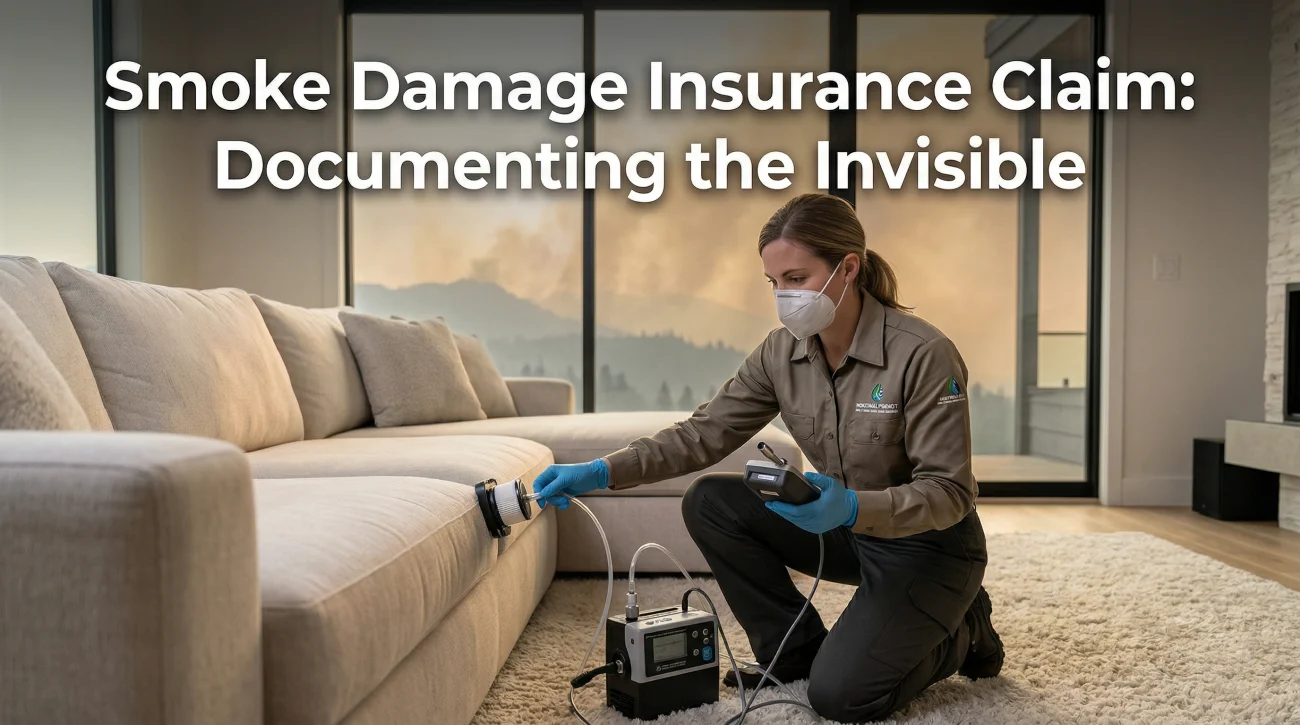
Smoke Damage Insurance Claim: How to Document What Adjusters Routinely Miss

Smoke Damage Insurance Claim

External smoke damage from wildfires or neighbor fires is frequently undervalued because adjusters rely on visual surface inspections for an invisible contaminant. The most expensive and commonly missed components are HVAC system contamination and soft-goods personal property, both requiring specialized assessment. Proper documentation must happen before you dispute a claim. Independent industrial hygienist testing is … Read more

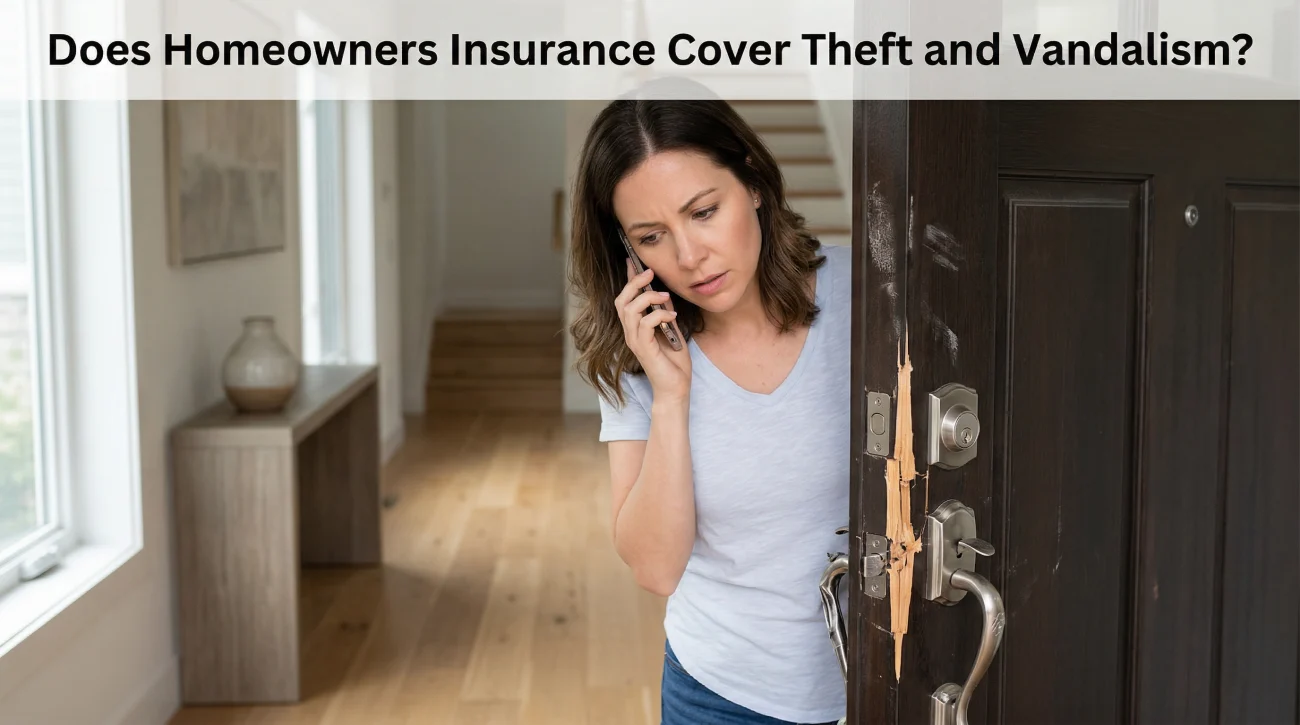
Does Homeowners Insurance Cover Theft and Vandalism? What’s Covered and What’s Not

Does Homeowners Insurance Cover Theft

Theft of your personal belongings is generally protected under your policy’s personal property coverage, but critical sub-limits strictly cap the payout for high-value items. Vandalism to your home’s physical structure falls under your dwelling coverage, but vandalism to your vehicle in the driveway requires a completely separate auto insurance claim. Without replacement cost coverage, stolen … Read more

Home Insurance Claim Check: What Happens to Your Payment and What You Can Do With It

Home Insurance Claim Check

Your claim check may include your mortgage company’s name because they have a legal financial interest in the property, requiring you to work with their loss draft department to access funds. If your check is larger than your repair costs, you can often keep the difference, but doing so on an RCV policy usually means … Read more

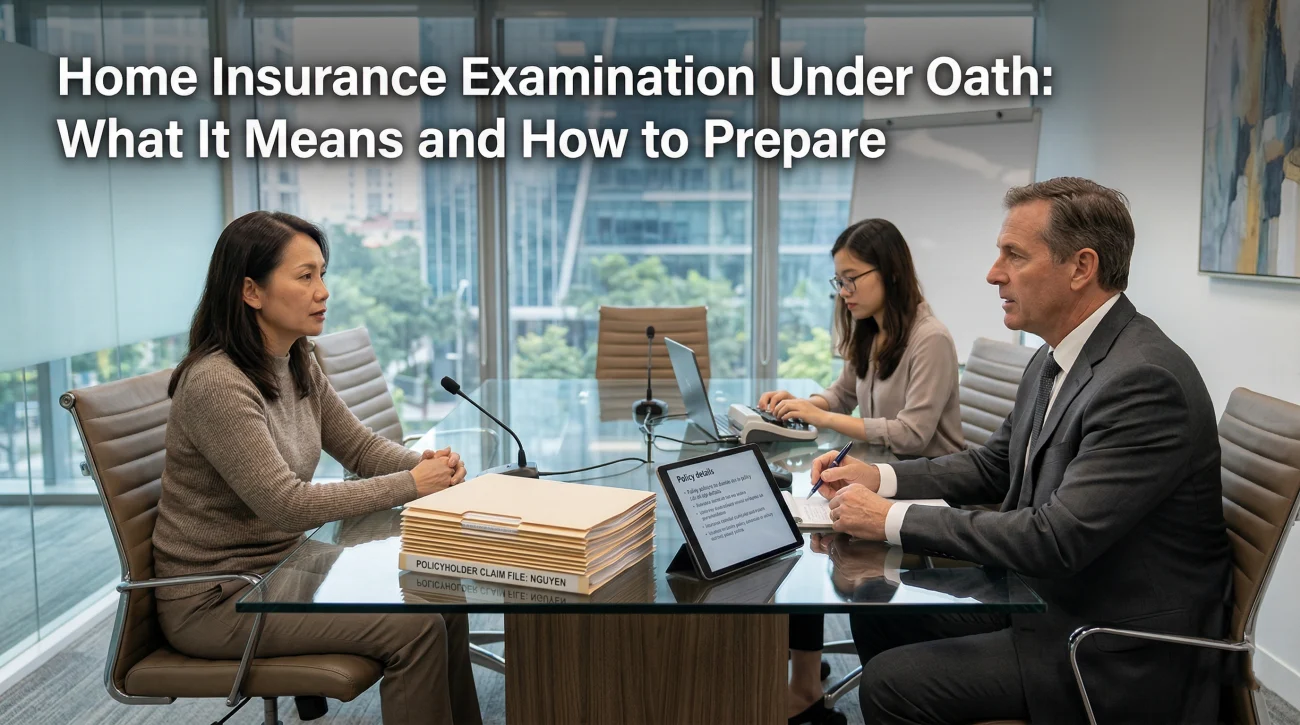
Home Insurance Examination Under Oath: What It Means and How to Prepare

Home Insurance Examination Under Oath

An Examination Under Oath (EUO) is a formal, legally binding proceeding where you answer questions from the insurer’s representative while under penalty of perjury. It is not the same as a casual recorded phone statement. The transcript becomes official evidence in your claim file. Most standard homeowners policies contain a cooperation clause that requires you … Read more

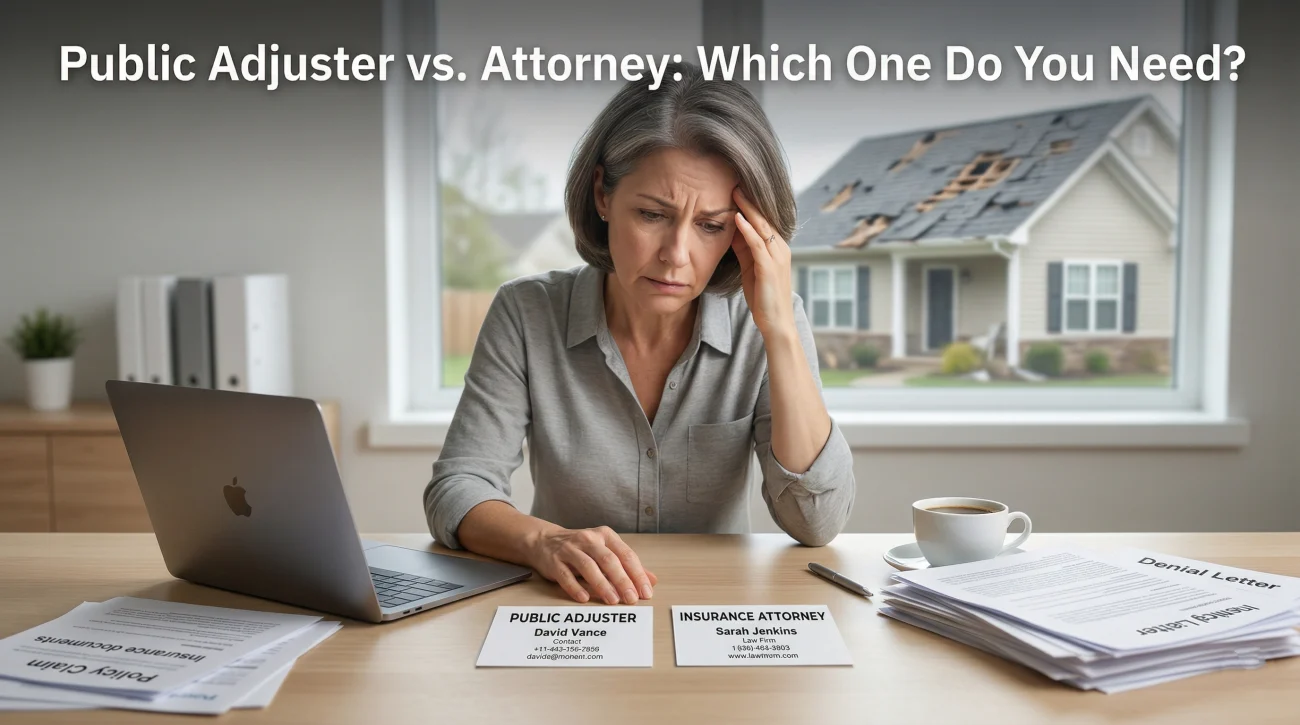
Public Adjuster vs. Attorney for Insurance Claims: Which One Your Situation Actually Needs

Public Adjuster Vs Attorney

A public adjuster (PA) and an insurance attorney serve completely different functions in a property claim dispute. Choosing the wrong one will cost you valuable time and money. Public adjusters are experts in construction scope and damage valuation. You hire them when the insurance company admits your claim is covered but refuses to pay the … Read more

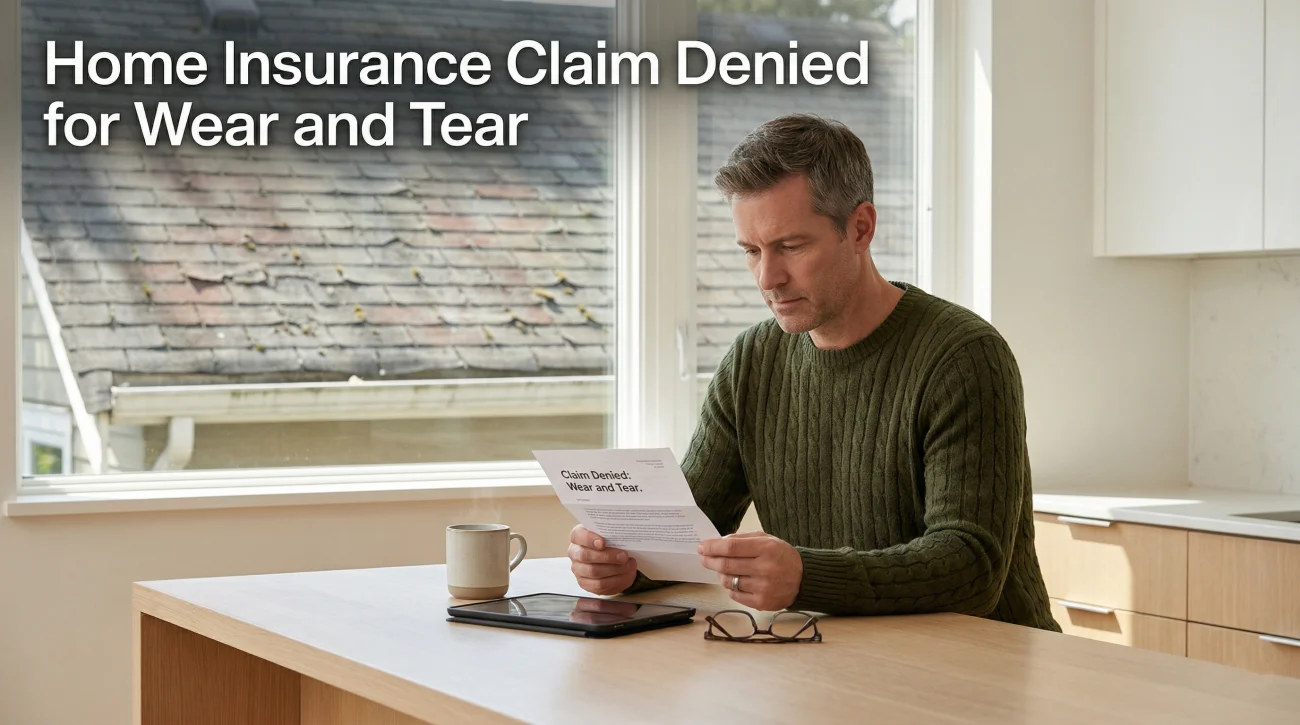
Home Insurance Claim Denied for Wear and Tear: What It Means and Why It Happens

Home Insurance Claim Denied Wear And Tear

“Wear and tear” is one of the most common reasons home insurance claims are denied, but it is also one of the most frequently misapplied by insurers. Standard policies do not cover gradual deterioration. Disputes typically arise when a storm impacts an already-aging roof or component. Insurers often rely on the age of materials or … Read more

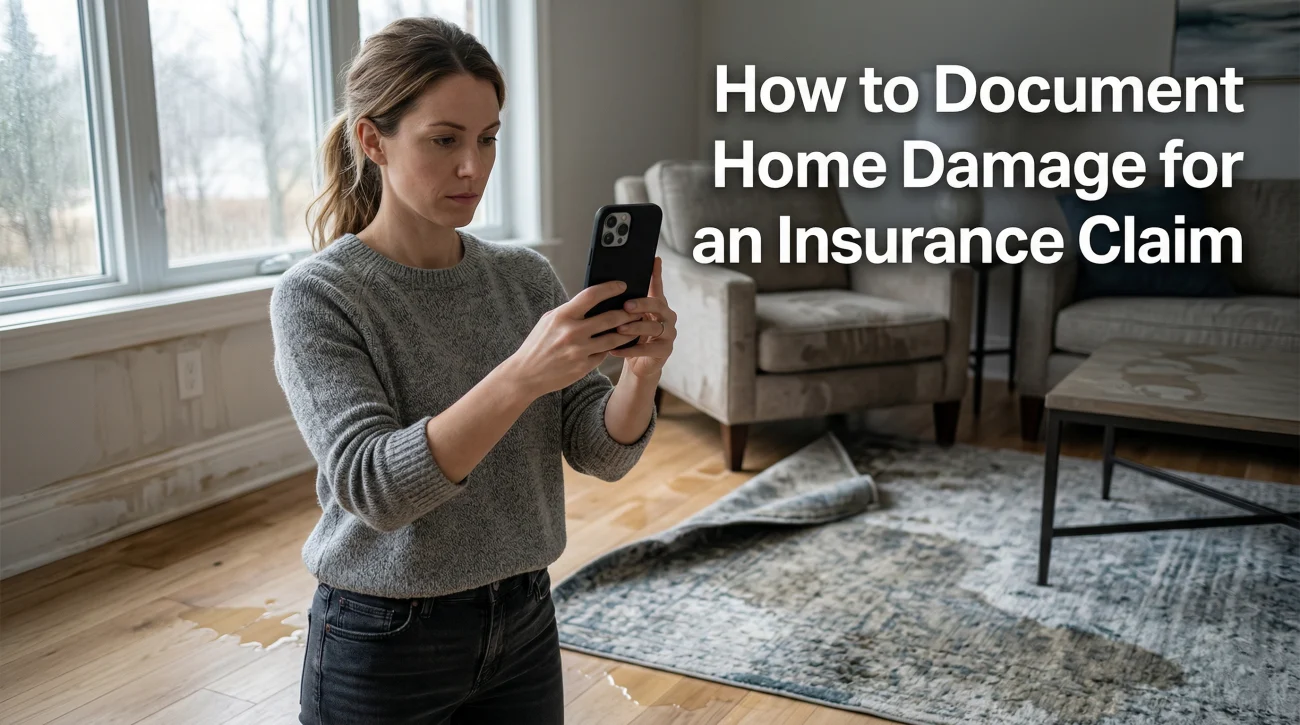
How to Document Home Damage for an Insurance Claim: What to Capture Before It’s Gone

How To Document Home Damage For Insurance Claim

Insurance claims are settled based on the evidence you provide, not just what actually happened. The documentation you capture in the first few hours is the foundation of your entire claim. Never discard damaged materials (like a burst pipe or burnt appliance) before the insurance adjuster inspects them. Emergency stabilisation is expected, but destroying evidence … Read more

Tree Damage Insurance Claim: What’s Covered, What’s Not, and Where Claims Go Wrong

Tree Damage Insurance Claim

Most standard policies cover tree damage only if the tree physically strikes a covered structure, like your home, garage, or fence. If a neighbor’s tree falls on your house, your insurance pays the claim. The neighbor is only liable if you can prove they were negligent before the fall. Insurers frequently deny claims by arguing … Read more

Does Homeowners Insurance Cover Fences, Detached Garages, and Other Structures?

Does Homeowners Insurance Cover Other Structures

Damage to fences, detached garages, sheds, and pools is generally covered by standard homeowners insurance under “Coverage B” (Other Structures). Coverage B is typically limited to 10 percent of your total dwelling coverage. If your home is insured for $300,000, you have $30,000 to repair or replace all detached structures. Outbuildings are covered against the … Read more